
This device has no English text-to-speech voice, so the article may not be read aloud.
Article by Prof. Dr. Apichart Vanavichit and the Rice Science Center team
1. #StorageConditions Milled rice should be kept in a cool, dry place away from light and moisture, and in a vacuum or low-oxygen environment, to extend storage life and preserve quality. If these conditions are not met, rice quality may decline.
2. #SignsOfDeterioration Before eating stored rice, check for signs of deterioration such as an abnormal smell, color change, or the presence of insects or mold. Any of these signs indicates the rice should not be eaten.
3. #LossOfNutritionalValue Even when rice is stored well, if it is kept for a long time its nutritional value may decline, for example through the loss of certain vitamins such as thiamine (vitamin B1). So rice stored for a long time, even if still safe to eat, may have reduced nutritional benefit.
4. #ChangesInCookingQualityAndTexture The cooking quality of rice can change over time. Rice stored for many years has a changed starch crystalline structure and may absorb water differently from before, affecting gelatinisation temperature and retrogradation. In addition, long-stored rice may change in color and smell, for example developing a rancid smell, or, if it is fragrant rice, losing its aroma. There may also be changes in texture or taste when cooked, for example becoming more crumbly and harder, which may affect deliciousness and eating satisfaction. However, it may be useful if the properties of hard-to-digest starch (resistant starch) are wanted.
5. #ChemicalResiduesFromStorage Storing rice in warehouses requires fumigation with chemicals to prevent weevils, insects or mold. If fumigated several times because of long storage periods, there may be a risk of chemical residues if they do not fully evaporate. Chemicals reported to be used to fumigate rice stored in warehouses include methyl bromide and aluminum phosphide, or phosphine.
6. #Mycotoxins Rice stored for a long time also carries a risk of chemical contamination by mold toxins such as aflatoxins and ochratoxin A, which carry the risk of causing diseases such as hepatitis, immune suppression and cancer, especially if the rice is not stored properly.
These substances may be harmful to health.
Although aluminum phosphide (AlP) #is a good stored-grain insect control agent because it was believed to leave no residue in rice grain, it has now been found that AlP can leave residues in fumigated grain. Normally, the chemical reaction of AlP with water yields hydrogen phosphine (PH3) and aluminum oxide (AO). Most of the PH3 disperses, but some penetrates the grain cell layers into the inner cells containing starch and nutrients. When grain is stored for a long time, oxidation reactions produce residues called phospho-oxyacids and ortho-phosphate. These residues cannot be removed by ventilation and high heat. The amount of these residues depends on the amount of PH3 and the starting moisture of the grain; if there is plenty of PH3 and the grain is high in moisture, more residues will form and penetrate the inner cells more. 70% of these oxidation products can be extracted by hot water, which means that cooking rice containing these residues affects consumers directly without their knowing. The other 30% of residues that are not water-soluble have no known exact chemical structure.
The international maximum residue limit (MRL) set by CODEX allows ortho-phosphate of not more than 0.1 ppm in raw materials and 0.01 ppm in food, causing great concern that residues from 10 years of rice fumigation must surely exceed the world standard, so that it cannot be consumed or exported. How do PH3 residues directly affect consumers? Because these residues can be absorbed through the stomach, consumers will have nausea, vomiting and difficulty breathing, and in severe cases may die. Besides these oxidation residues, there is also aluminum hydroxide (AH) remaining in the fumigated grain pile. AH has severe health effects if consumed, causing convulsions, soft bones, brain degeneration, memory loss, trembling and twitching, and even personality changes to a critical degree. As for the important residual toxins, the carcinogen aflatoxins, which tolerate high heat, and the recent discovery of the toxin bongkrekic acid (BKA) in wide rice noodles in Taiwan, which killed 2 Taiwanese consumers, is another important event, since BKA is produced by pathogens in the Burkholderia group, bacteria that cause disease in many plants including rice, causing grain discoloration disease, so the same event could occur with this 10-year-old stored rice.
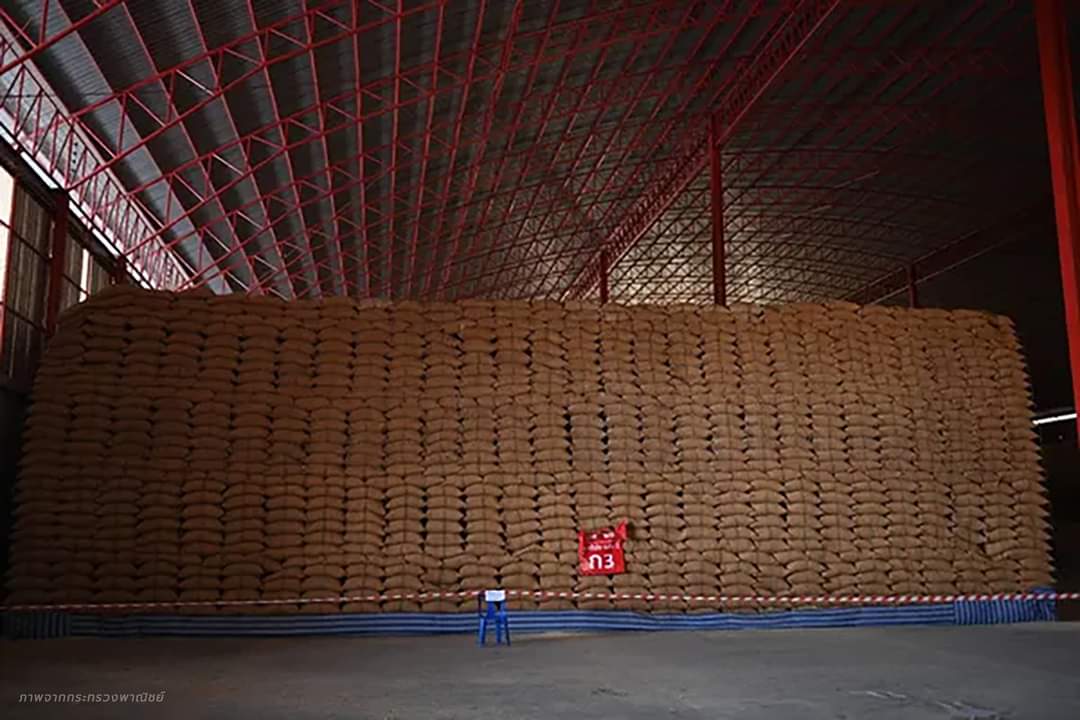
#For all the reasons compiled by academics from many institutions, the government should consider reviewing the 10-year rice consumption policy and allow researchers to start a careful assessment of risk and food safety first, then propose feasible ways to use this 10-year-old rice beneficially without harming consumers and without damaging the reputation of Thai rice, which is known for having the best rice standards in the world. Illustration source: Ministry of Commerce #MilledRice #10YearOldRice #Health #Safety #Consumers