


Waterlogging blocks oxygen in paddy soil, so methanogenic archaea produce methane (CH₄), using root exudates such as sugars, amino acids and organic acids as their carbon source. Most of this methane escapes through the air channels of the rice plant. This work examines four rice genes that may jointly influence methane emission through carbon allocation, transport and the root microenvironment. Grain yield was negatively correlated with methane emissions.
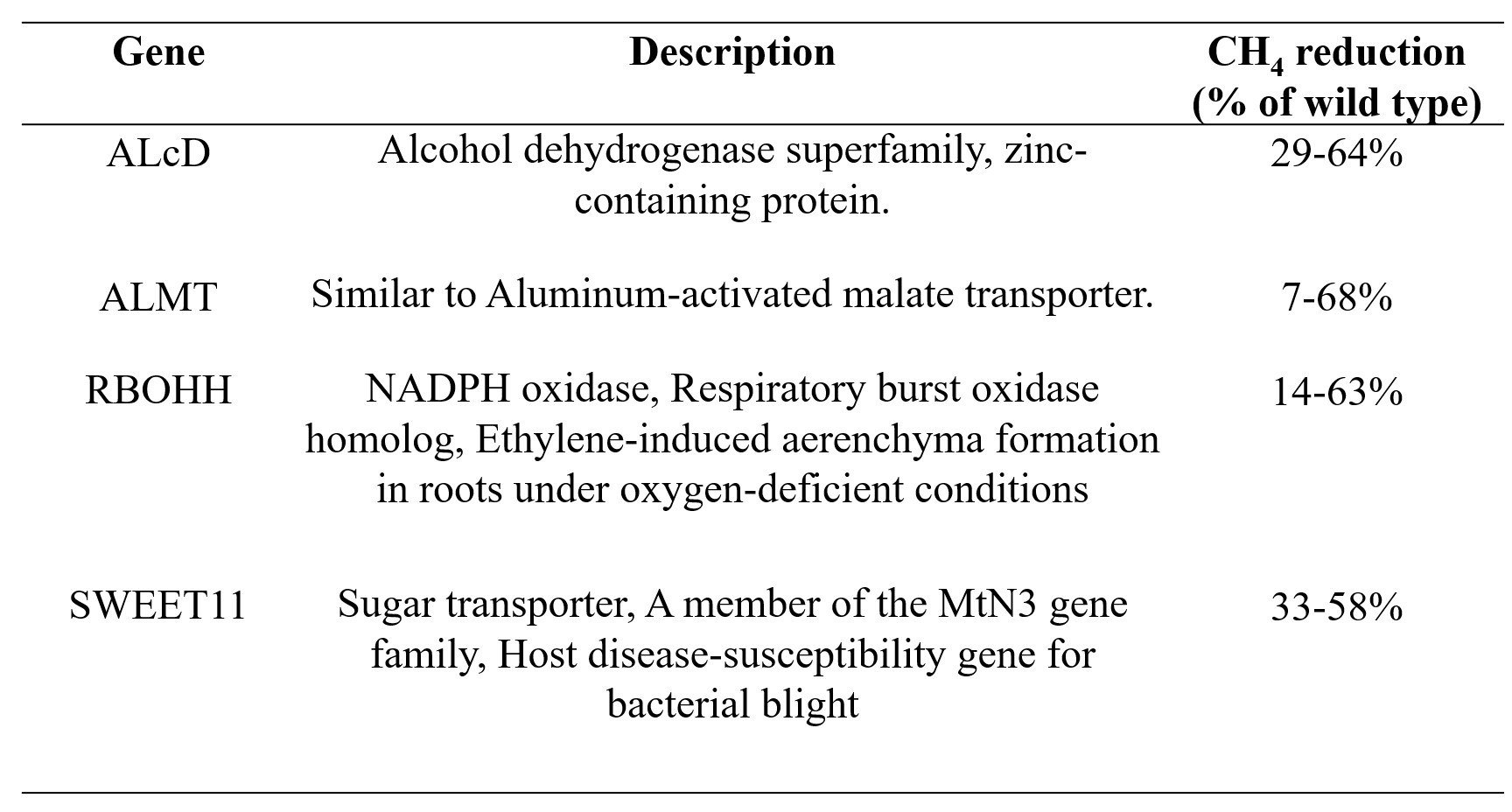
Four candidate genes
OsALcD · 29–64% less CH₄
Alcohol dehydrogenase superfamily, zinc-containing protein. ADH can help methanogens obtain reducing equivalents for methane production.
OsALMT1 · 7–68% less CH₄
Similar to an aluminum-activated malate transporter. Organic-acid efflux to the rhizosphere is a potential carbon substrate for microbes.
OsRBOHH · 14–63% less CH₄
NADPH oxidase in the root cortex. ROS signalling drives aerenchyma formation, which may increase O₂ release and CH₄ oxidation.
OsSWEET11 · 33–58% less CH₄
Sugar efflux transporter (MtN3 family; host susceptibility gene for bacterial blight). Sugars in the rhizosphere feed methanogens.
How methane moves through the plant
- 1
Dissolves around the roots
Rhizospheric methane dissolves into the surface water of the roots.
- 2
Enters the root
Methane diffuses into the root epidermis.
- 3
Enters the aerenchyma
It moves into the air channels inside the root.
- 4
Carried to the shoot
It is transported up the plant.
- 5
Released to the atmosphere
60–90% of the methane from rice fields leaves this way.
 2
 4
 5
 11