This device has no English text-to-speech voice, so the article may not be read aloud.
On 5 September 2014, the Ministry of Science and Technology held a press conference honoring Thai researchers who create research for the common good
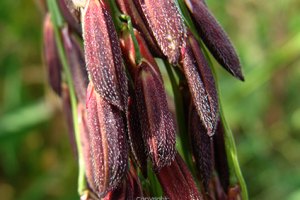
and won the ASEAN Science and Technology Awards 2014, at the Phra Chom Klao Building, Office of the Permanent Secretary, Ministry of Science and Technology. Mr. Somchai Thiamboonprasert, Deputy Permanent Secretary of the Ministry of Science and Technology, gave congratulations and presented souvenirs to two researchers: Dr. Theerayut Toojinda, a BIOTEC researcher, who received The ASEAN Meritorious Service Award (AMSA) as a scientist who has brought benefits to the ASEAN region in science and technology, and Dr. Nattaporn Pimpha, a NANOTEC researcher, winner of the ASEAN-US Science Prize for Women. Dr. Theerayut is an expert in using DNA technology to breed plants, especially rice breeding using marker-assisted selection together with standard breeding to obtain lines with the desired traits and reduce breeding time. He has extended cooperation to neighboring countries in the Mekong subregion, taking the lead in developing personnel in the Mekong countries so they can use DNA technology to develop their own rice varieties to tolerate unfavorable environments and resist important diseases and insects, by transferring molecular marker technology for rice breeding through workshops, graduate development and infrastructure for personnel from various agencies in the Mekong countries: Thailand, Myanmar, Lao PDR and Cambodia, supported by international organizations such as the Rockefeller Foundation and the Generation Challenge Programme (GCP). Today, Myanmar rice line MK-75, with basmati-like quality and resistance to bacterial leaf blight; Cambodian drought-tolerant rice line CAR3 with good cooking quality; Lao glutinous rice line TDK1 with good cooking quality and disease resistance; and IR57514, which tolerates flooding and drought and resists blast, have been released and are being widely grown in each country.


Source: http://www.most.go.th/main/index.php/organization-news/3922-2014-09-05-09-16-03.html