This device has no English text-to-speech voice, so the article may not be read aloud.
Assoc. Prof. Dr. Apichart Vanavichit Department of Agronomy, Faculty of Agriculture at Kamphaeng Saen Rice Science Center, Kasetsart University
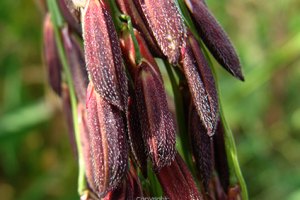
When we speak of colored rice, we mean brown rice, because the color compounds are pigments naturally produced by the rice plant and may accumulate in aboveground parts, especially the grain's bran. Bran is a thin tissue enclosing the grain's starch-storing part and the germ, the growth point of the embryo. Today consumers prefer polished rice, which is the starch-storing part of the grain, while most of the bran is usually extracted for oil or mixed into animal feed. Rice bran comes in 3 shades: brown, red and purple-black. Red bran contains a brick-red pigment (cyanidin-3-glucoside), while purple-black bran contains a red-blue pigment (delphinidin-3-glucoside) mixed in various ratios.
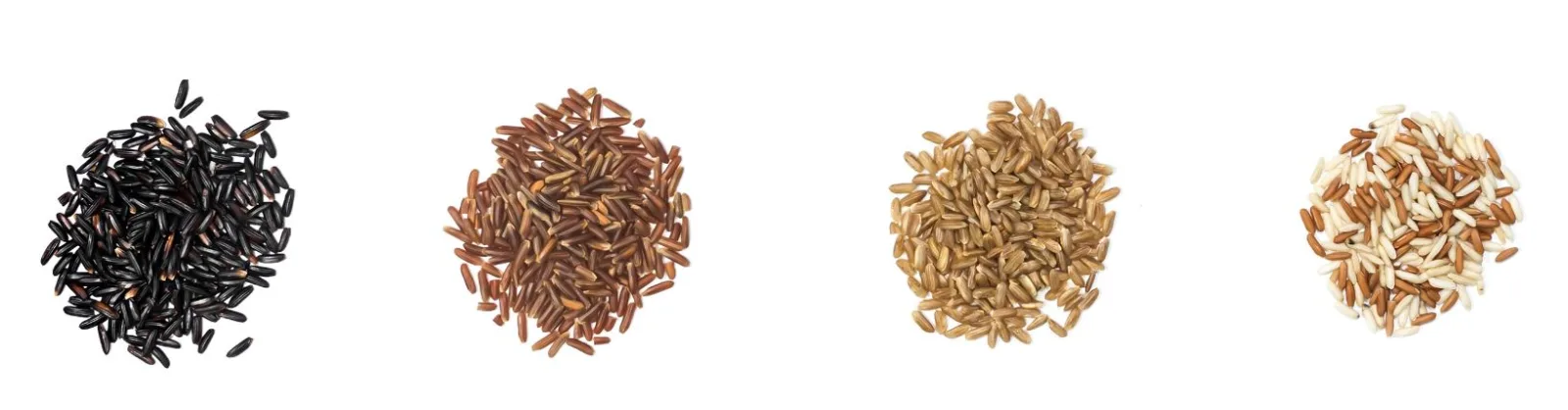
What do these pigments do? These pigments are produced to prevent UV light from passing through and destroying beneficial nutrients, so colored rice grains accumulate more nutrients, for longer, than uncolored rice, such as carotenoids, which are sensitive to UV light. In Riceberry, beta-carotene and lutein were found to accumulate at 185 and 224 mg/100g, which are not found in ordinary white rice. Anti-cancer compounds were also found: polyphenol, tannin and catechin at 946 mg/g, 201 mg/g and 439 mg/100g, or 3–10 times those found in ordinary brown rice. As for B vitamins, we also found high amounts of vitamins B1, B2, B3 and B9 (folate), especially folate, with deep purple bran accumulating folate at 48 mg/100g. Overall, eating colored rice provides antioxidants in two forms: water-soluble and oil-soluble.
The special feature of cold-pressed rice bran oil is that some pigments dissolve in it, making the oil deep green. Rice bran oil contains dissolved lipids called phospholipids, which benefit the development of brain alertness, and sphingolipids, the precursors of oryzamide. These substances are popular in cosmetics, helping increase moisture and inhibit melanin formation in the skin layers. High levels of important phytosterol-group compounds are also found: gamma-oryzanol, CoQ10 and the triterpene lupeol, which are key compounds that inhibit inflammation within tissues at high levels and act against cancer cell formation and blocked blood vessels.

As for protein, colored rice has higher protein than white rice and ordinary brown rice, with the amino acids lysine and methionine at higher levels than protein from white brown rice. Protein from rice with high antioxidants, when extracted with enzymes, can be digested very well (protein hydrolysate) and produces short-chain proteins (peptides) with disease-preventing activity, and causes no allergies at all (gluten free). These peptides are linked with phenolic compounds and ferulic acid, which have antioxidant activity. Moreover, protein hydrolysate is also popular in cosmetics, helping strengthen resistance to melanin formation.
The outstanding qualities of colored brown rice, combined with its popularity for processing into diverse food products, not only give products high antioxidants but also considerably more dietary fiber. All of this leads consumers to better health from the inside out.