This device has no English text-to-speech voice, so the article may not be read aloud.
Climate-ready rice varieties
with high nutritional value
Precision breeding has given rise to new rice varieties ready to cope with global warming and a shortage of health-promoting nutrients, with the dual burden of accumulating health nutrients and fighting disease and insects, to create an environment free from toxic chemicals.
The world's population is expected to grow to nearly 10 billion by 2050. We need not only more energy-giving food but also highly nutritious food to feed the population over the next 30 years. In a world where rice is the staple crop, climate change will make future food production more challenging. Irregular weather, temperature and rainfall affect not only rice yields but also outbreaks of disease and insects and the accumulation of nutrition in rice. Chronic non-communicable diseases (NCDs) are rapidly rising to become a global threat now and in the future. A cause may be excessive consumption of simple-carbohydrate foods among adolescents and the elderly.
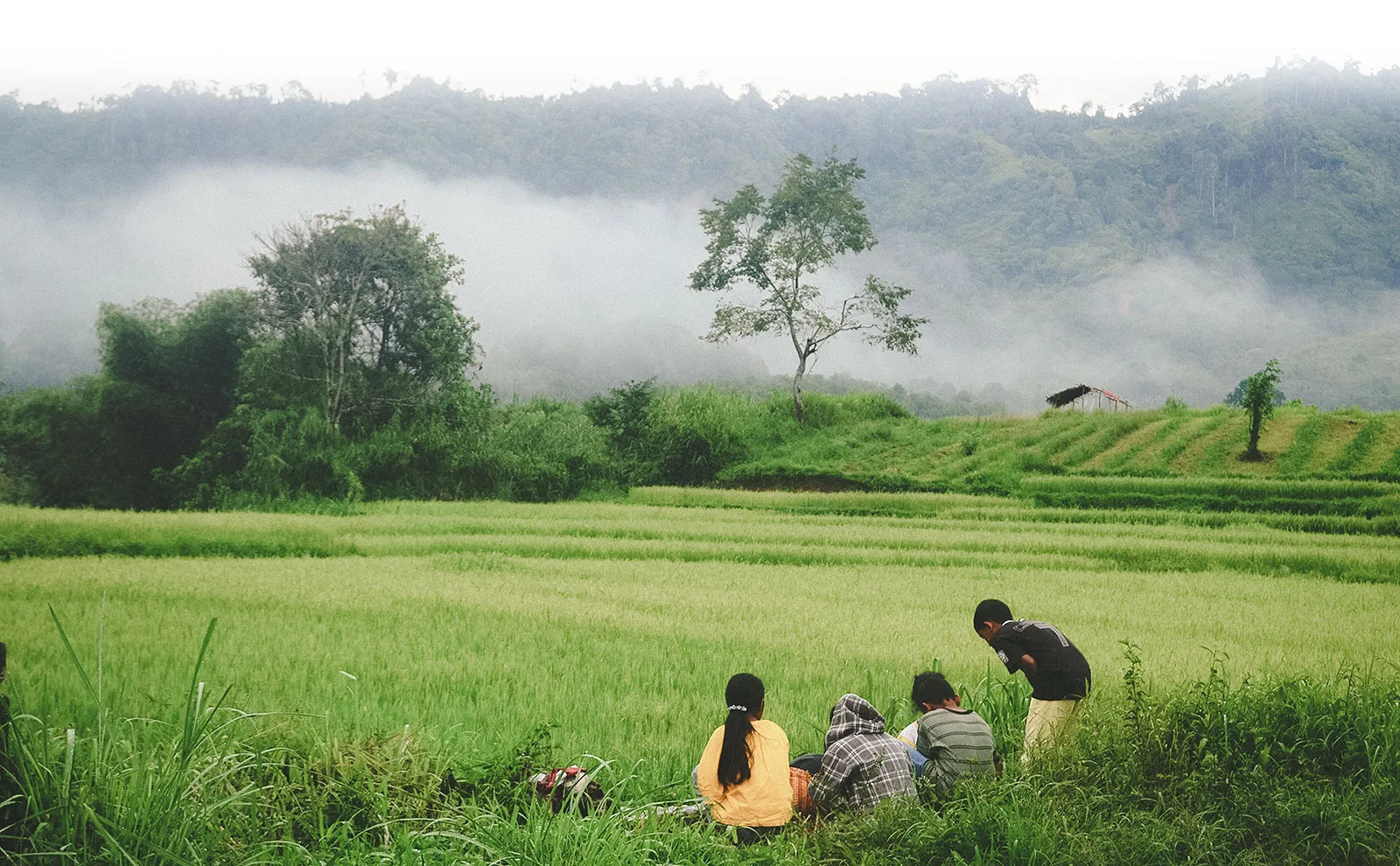
To reduce the problem, breeding rice for the future must simultaneously meet the goals of raising yield potential, resistance to disease and insects, and nutritional quality. Thailand is one of the world's major rice exporters that places special importance on premium rice. If these new lines are accepted by consumers and farmers, Thailand will play an important role in driving the chain of demand for highly nutritious food from the Thai kitchen to the new-era world kitchen.

Rice for good health Rice for well-being
Consuming food whose energy exceeds daily energy expenditure is the main cause of obesity and NCDs. Rice for good health includes starch properties, dietary fiber, prebiotics, antioxidants, and macro- and micronutrients that can reduce the risk of NCDs. By this definition, brown rice is rice for good health. Brown rice rich in vitamins, minerals, protein and dietary fiber keeps you full longer, lets consumers receive an appropriate calorie intake, helps keep blood sugar levels steady after meals, resulting in a low glycemic index (GI) and reducing the risk of obesity, type 2 diabetes and ischemic heart disease. It also provides essential nutrients to build up the microbiota in your digestive system, which helps strengthen immunity against infectious and non-infectious diseases such as diarrhea, irritable bowel syndrome (IBS), inflammatory bowel disease (IBD) and colon cancer. Breeding for palatable brown rice is therefore a main goal of rice improvement for a good quality of life.
Environmentally friendly rice Eco-friendly rice

Rice is naturally environmentally friendly, but today's industrial rice farming is a cause of environmental degradation. Rice for good health must be grown with environmentally friendly practices, such as chemical-free, reduced carbon emissions and low water use. However, inputs such as insecticides, fertilizers and pesticides still contain toxic chemicals and heavy metal residues such as arsenic (As) in the grain. Rice for good health must therefore resist a wide range of diseases and insect pests. We have developed a breeding platform to efficiently stack all the genes (QTLs) controlling resistance/tolerance to 2 weeks of flash flooding (Flooding; F) and resistance to blast (Blast; B), bacterial blight (Bacterial blight; B) and brown planthopper (Brown planthopper; B). Currently 9 Thai rice lines have been improved to tolerate flooding, disease and insects (FBBB), helping farmers grow toxin-free rice and safe food products. The most outstanding results are the new breeds called Hom Mali+4, which tolerates stress, disease and insects with grain quality the same as Khao Dawk Mali 1, and Pinkaset+4, which in addition to tolerating disease, insects and flash floods still provides energy with a low glycemic index.
 Climate change strongly affects rice cultivation in Asia, especially since 70% of Thai rice is grown in the largest rainfed area in the world. Heat waves and water shortages during the rice growing season affect grain set and grain quality. Because pollination in rice is affected by heat and water stress, a popular, high-yielding Thai variety called Phitsanulok 2 was improved for better grain set and seed quality at temperatures above 40 degrees Celsius.
Rice has very low water-use efficiency because of transpiration to cool the plant and inefficient photosynthesis. Working with a research team led by Professor Julie Gray of the University of Sheffield, UK, we discovered mutant rice with low stomatal density (Low Density; LD), which allows breeding rice with low water use (water-use efficiency; WUE) and maintaining high biomass under prolonged water deficit. Pin Kaset rice (Pinkaset+5) and new lines are in the final stages of breeding for low stomatal density (LD), low GI, antioxidants, flood tolerance, disease and insect tolerance (FBBB) and high yield.
From Riceberry to Rainbow Rice From Riceberry to Rainbow Rice
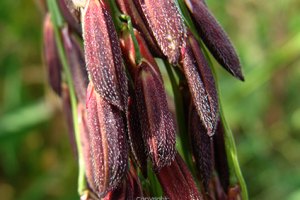
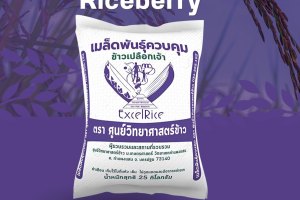
Dark-grained brown rice is a source of antioxidants such as anthocyanins, flavonoids, carotenoids and phenolic acids. Breeding new colored rice for good cooking quality and resistance to disease and insect stress is therefore another main breeding activity of the Center of Excellence. Riceberry is a deep purple rice newly bred from a cross between the world-famous Khao Dawk Mali 105 and Hom Nin non-glutinous rice with deep purple grains, producing Riceberry, which is known among consumers for its distinctive appearance and high nutritional value, with soft brown rice and a unique aroma. Riceberry is the most popular rice variety in nutrition studies and social development projects in Thailand (2–6). Riceberry is thus the most successful and truly valuable rice for a good quality of life (9).
In the next 50 years, consuming rice grain alone may not provide enough food. Using rice leaves as food could be another valuable supplement. Rice with colored leaves offers even more nutritional benefit. Rice leaves can absorb minerals and micronutrients 10 to 50 times better than the grain, because leaves are free of phytate, an important binder found in rice and cereals. Rice leaves also have high-quality protein and amino acids similar to green vegetables. We have succeeded in developing a non-GMO rice that combines complex anthocyanin patterns with chlorophyll patterns on the leaves: Rainbow Rice. The result is rice plants whose leaves come in many colors, from red, pink, purple, orange and yellow to green, with rainbow-like stripes. Rainbow Rice leaves are therefore a source rich in antioxidants, dietary fiber, micronutrients and amino acids. Food production innovations from rice leaves will thus effectively improve global food security, and poor and disadvantaged rice farmers can earn income by growing Rainbow Rice.
 Low glycemic index rice
Soft rice is popular and highly competitive in the world market, especially in Asia. Eating large amounts of polished soft rice easily triggers obesity and type 2 diabetes. Breeding rice to reduce the causes of diabetes is therefore another main activity of the Center of Excellence. An important property of rice for reducing the risk of NCDs is the glycemic index value. Measuring the glycemic index requires health-science accuracy, using healthy consumers with no history of using drugs for lowering blood sugar, obesity or blood pressure, who eat rice with the same appropriate amount of carbohydrate, together with suitably designed rice, then monitoring the rise in glucose after the meal over at least 120 minutes, compared with fasting glucose and the glucose from eating pure glucose with the same amount of carbohydrate. Lowering the glycemic index of soft rice may be done by eating soft brown rice with high dietary fiber and polyphenols, such as the Sinlek and Riceberry lines, which are soft brown rice with a moderate-to-low glycemic index. Developing polished soft white rice with a low glycemic index has not yet been achieved anywhere in the world. The polished rice with a low glycemic index successfully developed so far is all hard-textured rice, such as Basmati (India), Doongara (Australia) and Pinkaset+4 (the Center of Excellence). Making soft rice low in glycemic index involves complex genetic factors and processing techniques that reduce the rate of starch breakdown into sugar. The Center of Excellence therefore focuses on breeding brown rice that is soft, fragrant and nutritionally valuable in every respect, to solve the NCD problem now and in the future.
Low glycemic index rice
Low glycemic index rice
Soft rice is popular and highly competitive in the world market, especially in Asia. Eating large amounts of polished soft rice easily triggers obesity and type 2 diabetes. Breeding rice to reduce the causes of diabetes is therefore another main activity of the Center of Excellence. An important property of rice for reducing the risk of NCDs is the glycemic index value. Measuring the glycemic index requires health-science accuracy, using healthy consumers with no history of using drugs for lowering blood sugar, obesity or blood pressure, who eat rice with the same appropriate amount of carbohydrate, together with suitably designed rice, then monitoring the rise in glucose after the meal over at least 120 minutes, compared with fasting glucose and the glucose from eating pure glucose with the same amount of carbohydrate. Lowering the glycemic index of soft rice may be done by eating soft brown rice with high dietary fiber and polyphenols, such as the Sinlek and Riceberry lines, which are soft brown rice with a moderate-to-low glycemic index. Developing polished soft white rice with a low glycemic index has not yet been achieved anywhere in the world. The polished rice with a low glycemic index successfully developed so far is all hard-textured rice, such as Basmati (India), Doongara (Australia) and Pinkaset+4 (the Center of Excellence). Making soft rice low in glycemic index involves complex genetic factors and processing techniques that reduce the rate of starch breakdown into sugar. The Center of Excellence therefore focuses on breeding brown rice that is soft, fragrant and nutritionally valuable in every respect, to solve the NCD problem now and in the future.
5 new soft-textured rice lines have been bred. The development not only adds disease and insect resistance but also strengthens nutritional traits, namely micronutrients (Zn and Fe) and dietary fiber. However, to lower the glycemic index of soft rice that has a high glycemic index, the first step is to raise the dietary fiber in the grain, which led to the new variety “Sinlek” (Sinlex), a soft fragrant brown rice with a low glycemic index made into ready-to-eat rice. Improving low-GI white rice (GI 52–55) is done by reducing starch digestion in the body, that is, increasing resistant starch and dietary fiber, which led to the new line “Pinkaset+4” and now Pinkaset+5. Products developed from these newly developed low-GI rice varieties can be used to reduce the risk of obesity and type 2 diabetes in consumers who like to eat white rice.