This device has no English text-to-speech voice, so the article may not be read aloud.
Black rice bran is a source of antioxidants
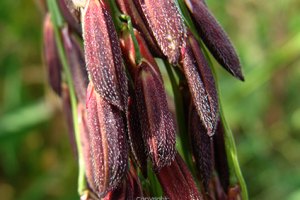
Black rice has good antioxidant properties because it is high in free-radical scavengers, including quinolone alkaloid, vitamin E, phytate, gamma-oryzanol, polyphenol and anthocyanin. In the black rice variety Riceberry, polyphenolic content was found to be as much as 752.1 mg/100g, anthocyanin 250.36 mg/100g and beta-carotene 63.3 ug/100g, found mostly in the pericarp. All three compounds are related to antioxidant capacity, especially polyphenolics, so black rice bran is a source of antioxidants.
The group of chronic non-communicable diseases, including cancer, is the No. 3 cause of death of Thais in every age group. Important organs affected are liver and bile duct cancer, lung cancer, breast cancer and gastrointestinal cancer. The death rate from cancer per 100,000 population rose from 12.6 to 68.8 during 1967–2001 (Ministry of Public Health). Reactive oxygen species (ROS) arise from the body's normal processes and increase from inflammation, exposure to chemicals from pollution, some drugs, smoking or radiation. ROS cause lipid peroxidation reactions, which allow toxic substances to damage cell membranes, DNA and RNA structures and biomolecules in cells, an important cause of many chronic non-communicable diseases such as cardiovascular disease, kidney disease, joint disease and cancer.
Epidemiological studies found that eating vegetables, fruits and cereals, which are high in antioxidants, can reduce the incidence of these chronic diseases. In addition, receiving antioxidants from many kinds of food gives more protection than receiving them from any single source because they act synergistically. Cereals provide many antioxidants that work better when taken together with compounds from vegetables and fruits. The antioxidant activity in rice comes from the phenolic compound group (phenolic acid derivatives), found mostly in the bran.
Antioxidant efficacy
Studies found that the deeper purple the rice, the greater its antioxidant efficacy, with values between 35.3 and 214.7 umole/g by the ORAC (Oxygen Radical Absorbance Capacity) method. In particular, Hom Nin and Riceberry bran have high antioxidant efficacy of 229 to 304.7 umole/g, and when various rice varieties were compared with ready-to-drink fruit juice or green tea drinks, they were found to have almost 100 times more antioxidant efficacy. Cooking deep purple rice in an electric rice cooker was found to reduce antioxidant efficacy by about 50 percent, or about half that of raw rice. However, purple rice still has higher quality and efficacy than ready-to-drink fruit juice or green tea drinks sold on the market, and the deeper the color of the grain, the higher the antioxidant effect. Research found that cooked Riceberry and Sinlek brown rice still retain antioxidants that are not completely destroyed by heat, so they are food sources high in antioxidants. Getting enough antioxidants for each day's needs helps reduce the risk of diabetes, heart disease, vascular disease and cancer.
Antioxidants in rice bran oil
Rice bran is a source of oil containing antioxidants such as vitamin E, tocopherols, carotenoids and gamma oryzanol. Its outstanding property, which differs from other vegetable oils, is that it contains the key compounds gamma oryzanol and tocotrienols, which have been found to help lower blood cholesterol and reduce the risk of heart disease. In addition, rice bran oil can be used in various industries, such as animal feed, using free fatty acids to make soap, using the wax as an ingredient in various polishes, and cosmetics. When oil was extracted from rice bran by supercritical fluid extraction (SFE) and examined by LC-ESI-MS/MS to preliminarily check compounds with antioxidant properties in rice bran oil, Riceberry bran oil was found to have beta-carotene as high as 36.8 ug per 1 gram of bran and several flavonoids with high antioxidant properties. Carotenoids have been reported in the oils of many plants, such as corn oil, groundnut oil, soybean oil, rapeseed oil, linseed oil, olive oil, barley oil, sunflower-seed oil and cottonseed oil, which, counting all carotene derivatives, contain about 100 ppm.
Rice products high in antioxidants
Because people today are increasingly interested in the health effects of antioxidants, and studies found that Riceberry and its bran have good antioxidant efficacy, Riceberry and rice bran were developed into healthy snacks, another option for consumers. For product development, steamed buns (mantou) and filled bread containing rice bran and red beans were chosen, because they are foods people of every sex and age can eat.
When the antioxidant efficacy of the filled bread and mantou was compared per serving with popular green tea drinks on the market, the filled bread and mantou showed good antioxidant efficacy, and the filled bread in particular had markedly higher antioxidant efficacy than the green tea drink. Both snacks are therefore another option for consumers.