This device has no English text-to-speech voice, so the article may not be read aloud.
Antioxidants
Antioxidants are compounds that can prevent or slow oxidation processes, which occur in many forms, such as the breakdown of protein and fat from food we eat, air pollution, breathing, cigarette smoke and UV radiation, all of which generate free radicals in the body that can damage it. In reality, no single compound can prevent all oxidation. Each mechanism may need a different antioxidant to stop the oxidation process. On the other hand, oxidation is a process important to the body; for example, we use oxygen from the air we breathe to burn food the body receives into energy for the work of various cells, but this also produces free radicals as a by-product. The free radicals formed react with important molecules in the body, such as fats, proteins and DNA, damaging those molecules.

Food is therefore one important factor that plays a role in preventing chronic non-communicable diseases such as cardiovascular disease, diabetes and cancer. Results from clinical and epidemiological research confirm that eating vegetables, fruits, unpolished grains and various herbs, which are important food sources of antioxidants, helps reduce the risk of chronic non-communicable diseases.
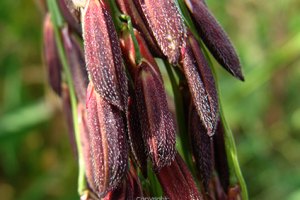
The brown rice of colored rice is rich in the pigment anthocyanin, which accumulates until the leaves and every part of the flower stalk are beautifully colored from purple to pink. The anthocyanins found in Rainbow Rice are a mixture of cyanidin-3-glucoside (orange-red), peonidin-3-glucoside (orange-red), pelargonidin-3-glucoside (orange) and delphinidin-3-glucoside (blue-red). Anthocyanin is the most important antioxidant in rice because it is present in the greatest amount, is water soluble and is easily absorbed. Other nutrients found in large amounts in colored rice include folate, vitamin E, polyphenols, beta-carotene and lutein, but amounts depend on the rice variety.

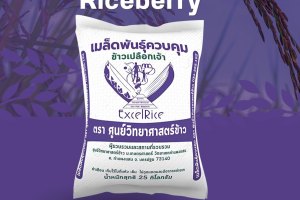
The success in developing Riceberry by the Rice Science Center, Kasetsart University, with Mahidol University and Chiang Mai University has opened the door to more complete integrated therapeutic nutrition research. Riceberry brown rice is very popular among health-conscious consumers at home and abroad. In addition, Riceberry products have created a wide variety of nutritional therapy added value. The added value begins at the starting point: paddy price, organic status and being Riceberry. Calculating further along to the primary product, brown rice, and an intermediate product, rice bran oil in capsules (Oilberry), paddy priced at 25 baht per kg becomes rice bran oil priced at as much as 10,000 baht per kg.
Efforts to create rice varieties with complete nutrition are a great challenge for researchers. At present no rice variety has balanced nutrition under natural breeding. The success in developing Pinkaset+4 (low glycemic index) and Riceberry (high antioxidants) answers the need for developing therapeutic food products with high nutritional properties for patients suffering from unbalanced diets, such as diabetes, cancer, heart disease, high blood pressure and kidney disease, as well as health-conscious consumers.