
This device has no English text-to-speech voice, so the article may not be read aloud.
By Prof. Dr. Apichart Vanavichit and team Rice Science Center, Rice Gene Discovery Unit, Kasetsart University, Kamphaeng Saen Campus
Begun in 2010 (B.E. 2553), it resulted from crossing the male parent ‘Hom Nin non-glutinous white-leaf mutant’ with the female parent ‘Kam Hom Nin rice’, producing "Rainbow Rice", by the Rice Science Center, Kasetsart University, Kamphaeng Saen Campus.
Rice leaves are generally green because of the accumulation of a pigment called chlorophyll, the most abundant pigment in the world, since photosynthetic plants and microorganisms all have it. Some rice has clearly different leaf colors, such as the native glutinous variety called Kam rice, which has purplish-green leaves, and some lines may have very beautiful deep purple leaves and stems. The pigments that give rice leaves color fall into 3 main groups: chlorophyll, giving green, carotenoids, giving yellow to red, and anthocyanins, giving red-purple to blue.

Breeding Rainbow Rice
By crossbreeding, F2 plants were selected with emphasis on the variety of shades on the leaf blade, leaf shape and leaf size, which showed a spread of leaf colors from green alternating with white, to pink and purple. Plants with good plant type and uniform leaf color and shape were selected to choose lines representing each leaf shade from outstanding F2 families. They were then crossed between F1 families to produce and grow, and F2 seed was collected and grown, selecting F2 lines with the target leaf colors, upright leaves, upright hill and photoperiod insensitivity, in 2013 (B.E. 2556).
F3 families from each cross were selected and grown in 2014 (B.E. 2557), and this was repeated in the F4 and F5 generations in 2015–2016 (B.E. 2558–2559), until Rainbow Rice with different leaf colors, different heights, upright hills, photoperiod insensitivity and long maturity was obtained, 5 lines in all.
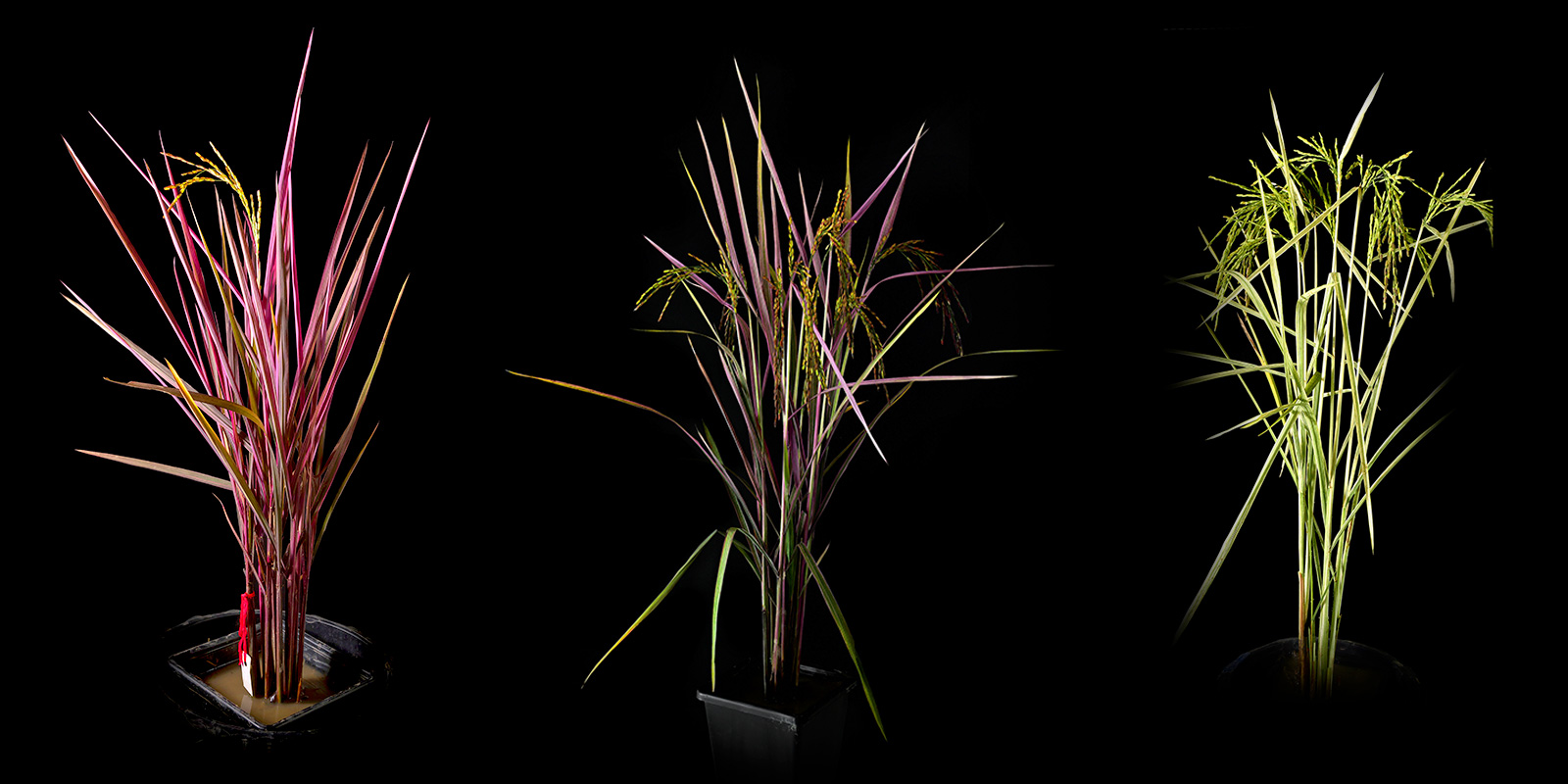
Consisting of
- Ruby-pink-leaf tall line (Rainbow 01)
- Ruby-pink-leaf short line (Rainbow 02)
- Pink leaf with green and white stripes, tall line (Rainbow 03)
- Pink leaf with green and white stripes, short line (Rainbow 04)
- White-leaf line (Rainbow 05)
These Rainbow Rice lines show clear and very beautiful colors on the leaf blade when grown in the cool season. All 5 Rainbow Rice lines are in the process of applying for new plant variety registration (Plant Variety Protection: PVP).
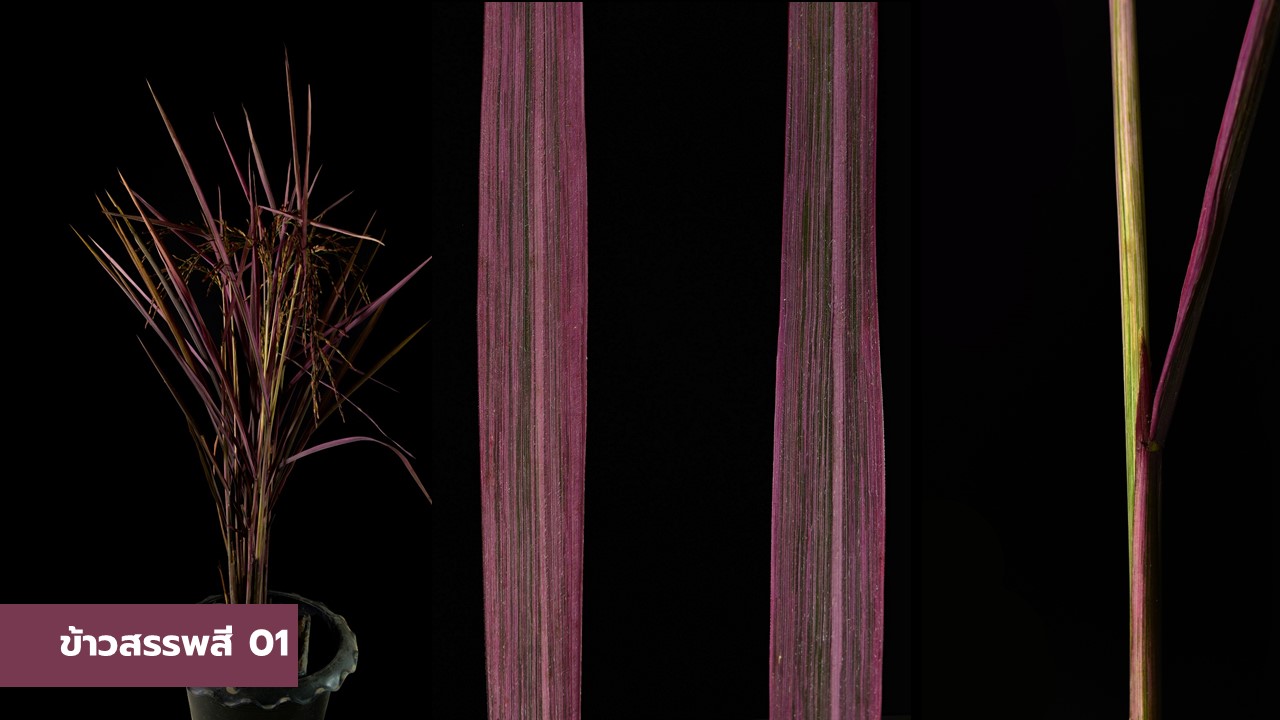
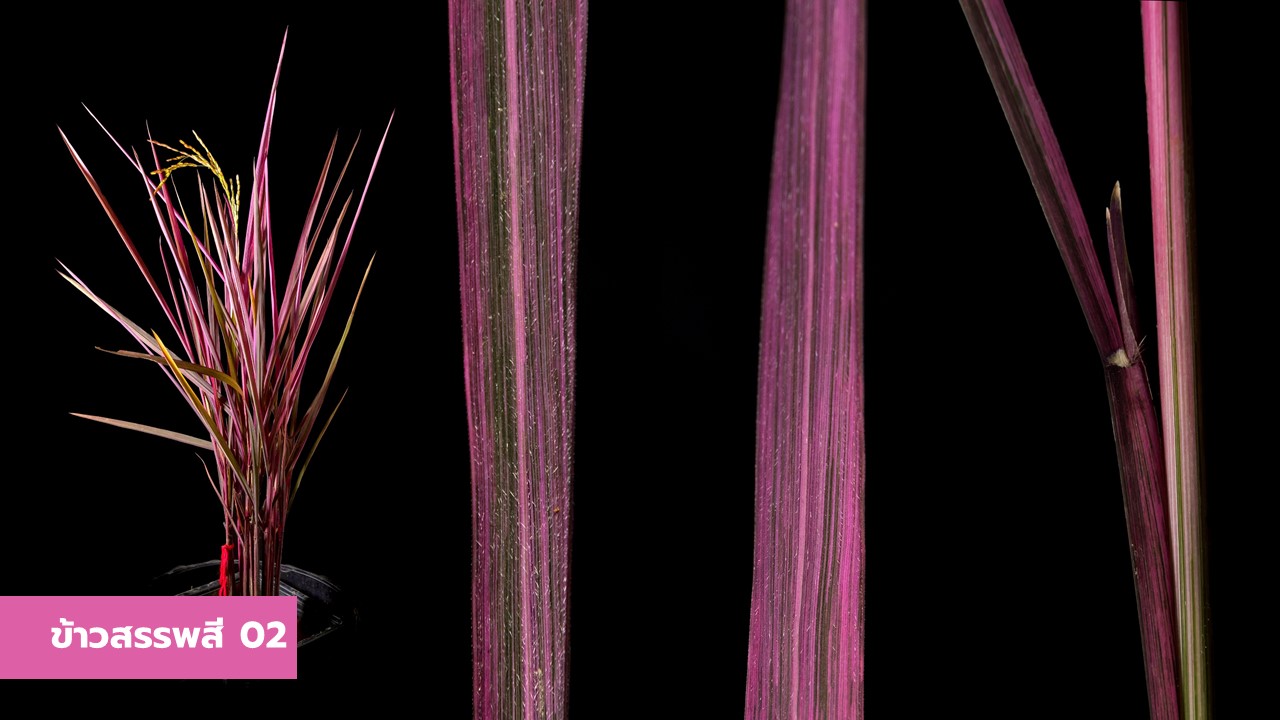
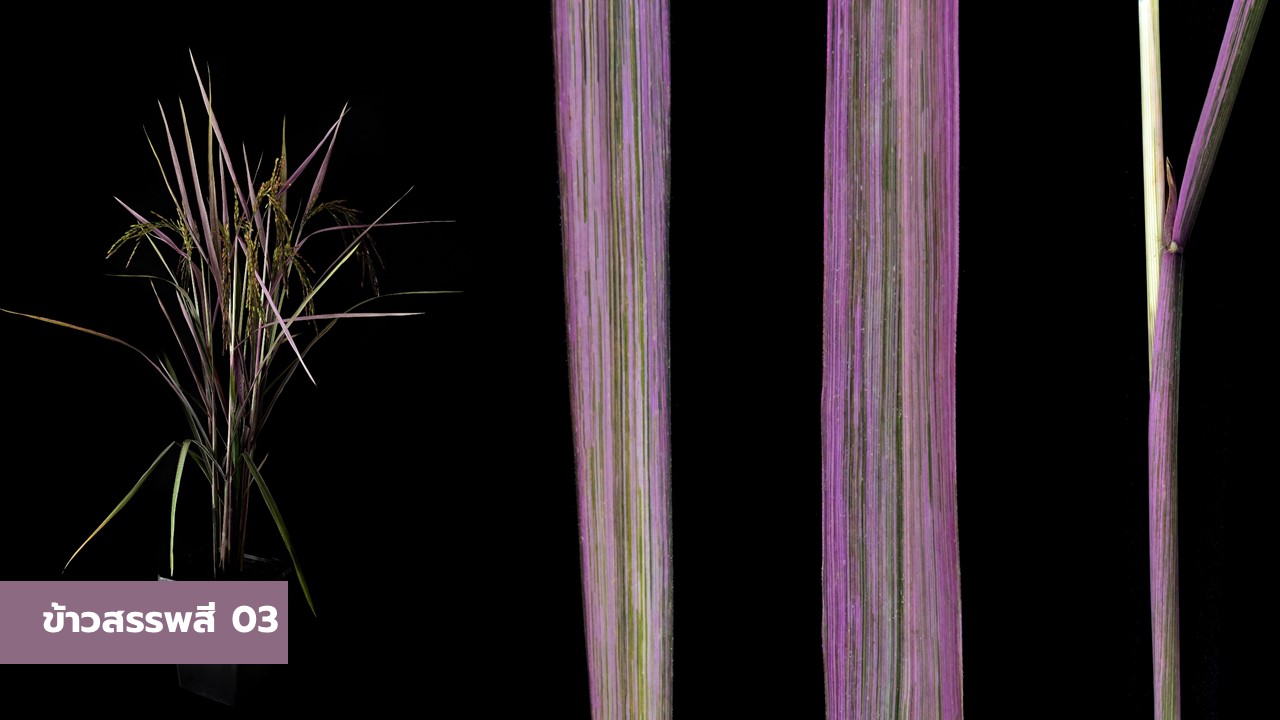
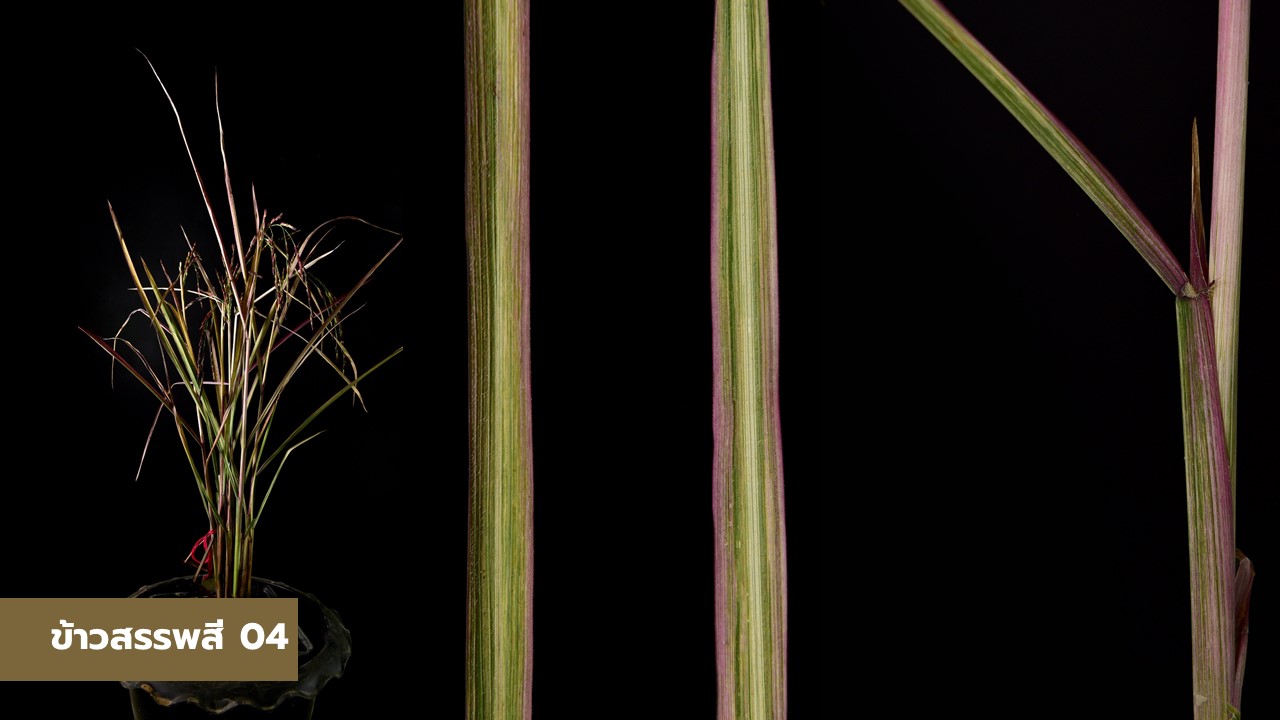
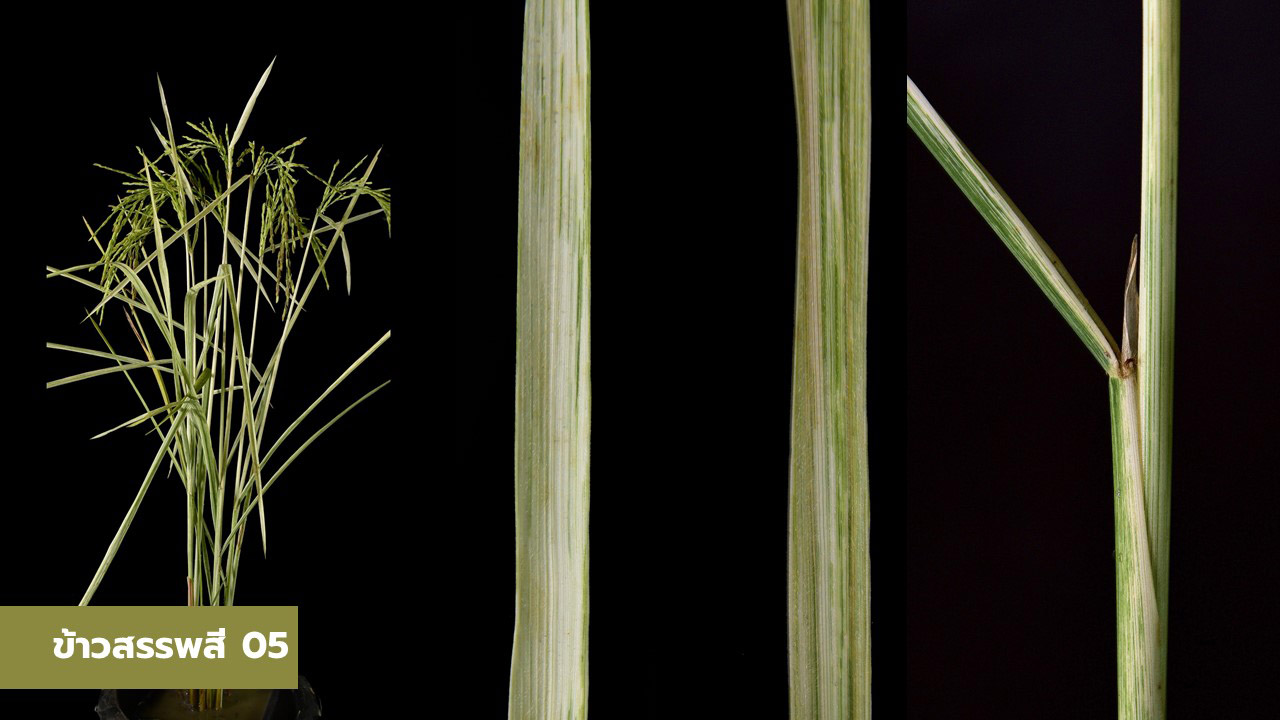
The pigment found in Rainbow Rice is anthocyanin, which accumulates until the leaves and every part of the flower stalk are beautifully colored from purple to pink. The anthocyanins found in Rainbow Rice are a mixture of cyanidin-3-glucoside (orange-red), peonidin-3-glucoside (orange-red), pelargonidin-3-glucoside (orange) and delphinidin-3-glucoside (blue-red).

Anthocyanin is the most important antioxidant in rice because it is present in the greatest amount, is water soluble and is easily absorbed. Eating colored brown rice, as well as colored vegetables and fruits, therefore helps reduce oxidative stress inside cells very well. In addition, anthocyanin stimulates blood circulation in arteries, especially capillaries, and counters the buildup of fat that blocks blood vessels.