This device has no English text-to-speech voice, so the article may not be read aloud.
Rice Science Center, Kasetsart University is applying its knowledge to empower the Ban Pam Bok community, driving sustainable economic, social, and environmental growth.
When the PM2.5 crisis is not just about "smoke" but stems from agricultural waste with no viable alternatives for value creation, the answer isn't simply telling farmers "don't burn." Instead, it lies in showing them that "not burning generates income." This approach transforms what was once considered worthless into a valuable resource—turning smoke into value and shifting an environmental problem into an opportunity for the community.
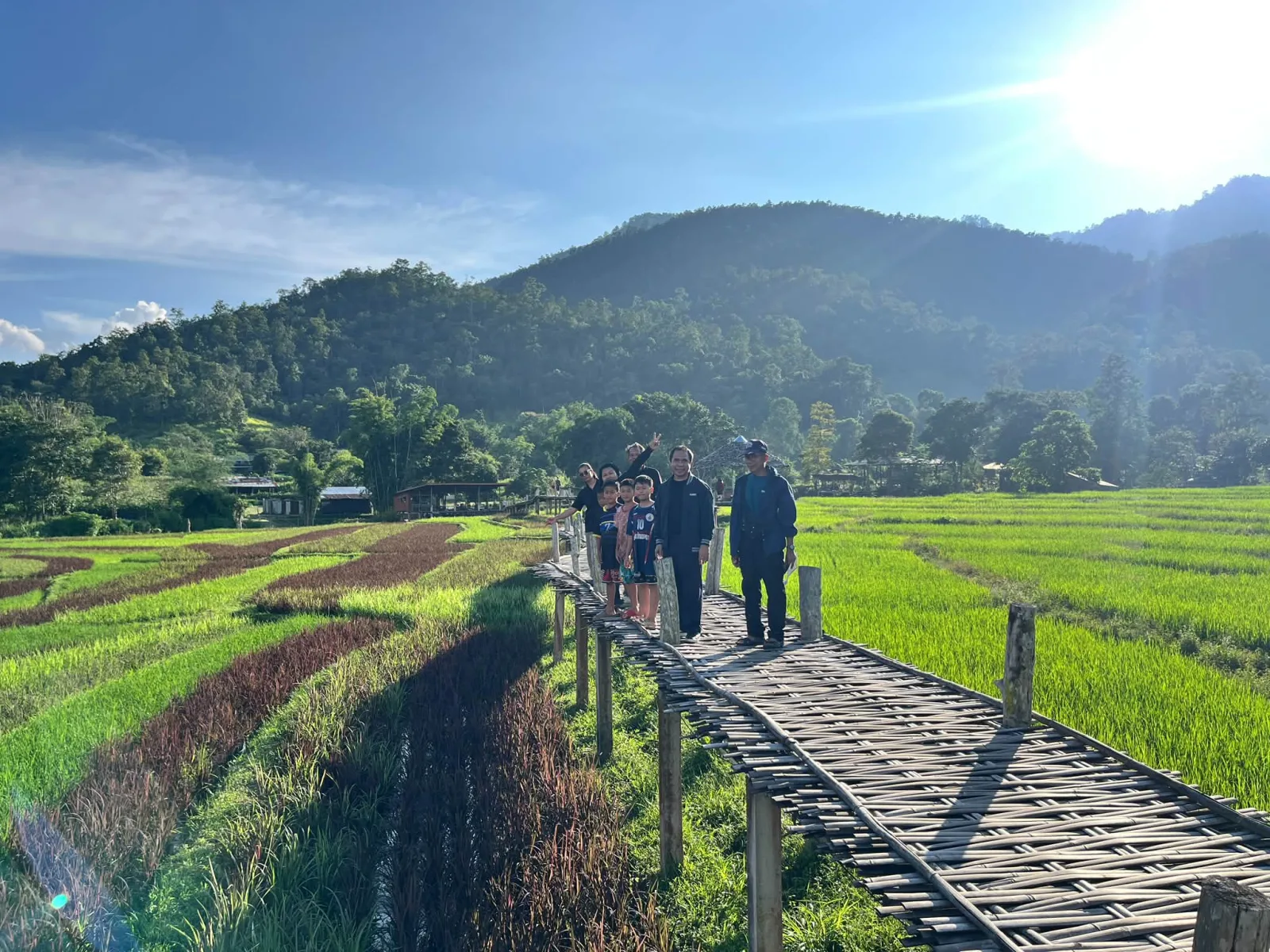
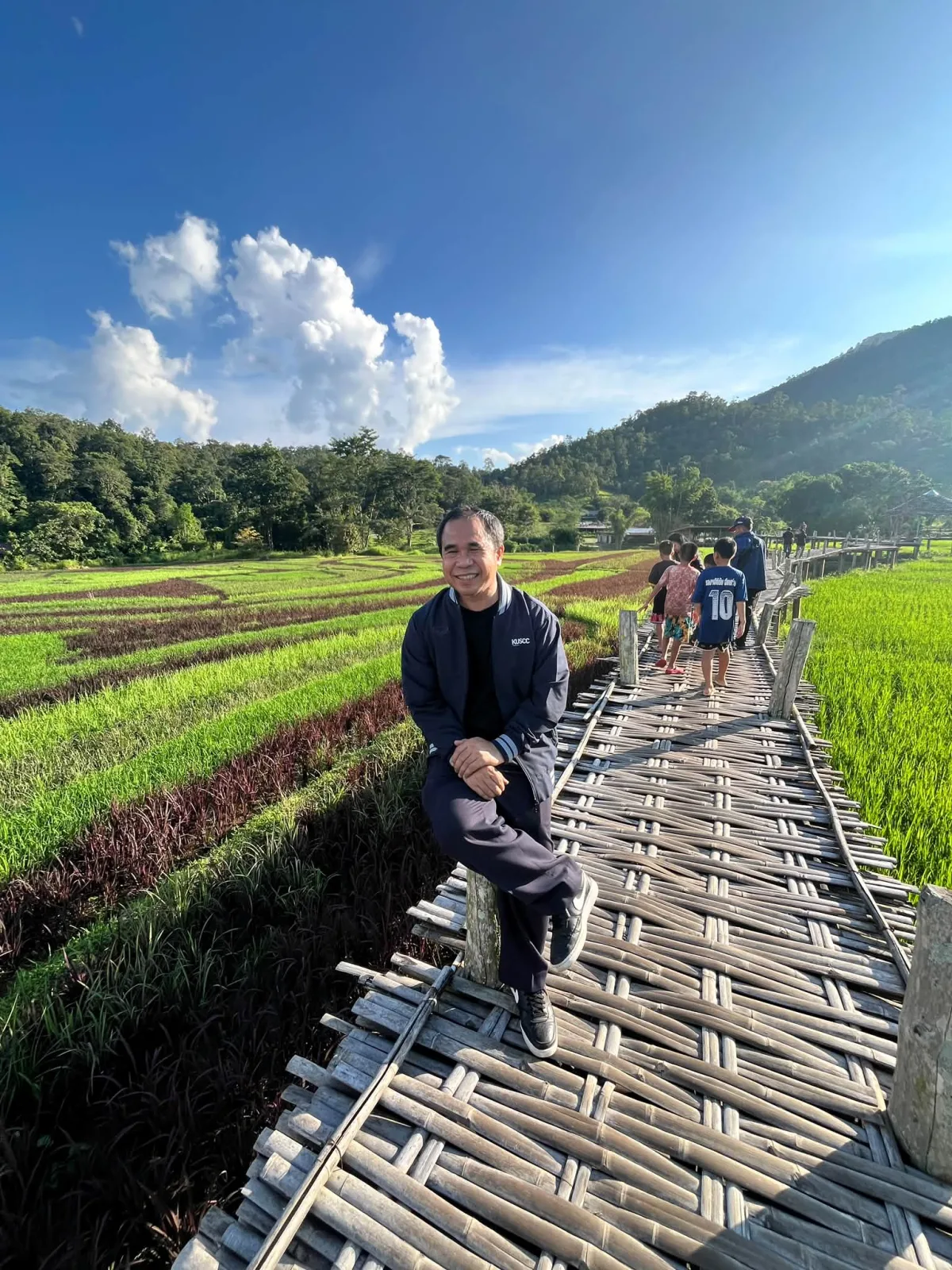
This concept is currently driving the development of Ban Pam Bok in Thung Yao Subdistrict, Pai District, Mae Hong Son Province. Here, Kasetsart University’s expertise merges with local wisdom, traditional lifestyles, and community resources to co-create a tourism model. This initiative focuses not just on attracting visitors, but on returning value to the people and the land.
A working group comprising the Non-Burning Regenerative Agriculture Rice Project for Clean Air and High-Value Markets (Clean Air Rice), the Rice Science Center, and the Extension and Training Office (Kamphaeng Saen) at Kasetsart University, has collaborated to integrate agricultural, environmental, and spatial development research into educational tourism.
The core strategy is transforming "agricultural waste"—which farmers previously had to eliminate by burning—into reusable resources. These resources are now being utilized to develop products, design learning activities, and generate income for the community. Therefore, the goal goes beyond merely boosting tourist numbers; it is about establishing "value-creating tourism." Visitors are invited to experience the local way of life, nature, culture, and wisdom. Simultaneously, residents gain income, stable livelihoods, and a renewed sense of pride in their hometown. This holistic development happens simultaneously across the economy, society, and the environment. Revenue circulates within the community, inspiring the younger generation with opportunities to return and build their lives at home. Meanwhile, natural resources and air quality are preserved as essential capital for the future.
This initiative brings research out of the university walls and into people's real lives. It stands as a true reflection of the "Kasetsart: Knowledge of the Land" philosophy, which is rooted in the belief that knowledge reaches its truest meaning when it provides sustainable benefits to the people and the earth.
From agricultural waste to added value, from smoke to income, from academic knowledge to community empowerment, and from tourism to happiness, sustainable careers, and a flourishing future on their own land.