This device has no English text-to-speech voice, so the article may not be read aloud.
Aroma gene 2-AP
- Discovery of the gene that controls the production of aroma compounds 2-AP in rice, a world first. A patent was filed for the first time in the world in 2007 in the United States, titled technology to suppress expression of the Os2AP gene and raise levels of the aroma compound 2-acetyl-1-pyrroline (Transgenic plants with reduced expression of Os2AP and elevated levels of 2-acetyl-1-pyrroline). It has since been granted in 10 more countries: Australia, Japan, China, Vietnam, India, France, the United Kingdom, the Netherlands, Germany and Switzerland.

Rice variety development
- Rice variety development for food security and well-being. The focus is on developing precise, efficient breeding technology to combine “resistance genes +6”, namely tolerance of sudden flooding, heat tolerance, lower water use, and resistance to bacterial leaf blight, panicle blast and brown planthopper, on the genetic background of glutinous rice, fragrant rice, low glycemic index rice and colored rice that are valuable in nutrition, cooking quality and high yield. 30 prototype rice lines have been discovered, such as Hom Mali+4, Thansirin glutinous rice+4, Pin-index fragrant rice+4 and Riceberry+4. These varieties have been developed to adapt to global climate change and to use water more efficiently, needing less water to produce a yield.

Nutritious rice
- Notable rice achievements of the Rice Science Center are as follows. Riceberry is the most famous rice and the most studied by researchers for its therapeutic nutrition. Riceberry is the first non-glutinous brown rice variety recognized worldwide for having the best brown-rice texture, an aroma, high antioxidants and proven therapeutic nutritional properties, and it can be processed into many nutritious products. Riceberry is now the rice most often used in Thailand to develop new food products. Sin Lek is the first white brown rice variety studied for high iron and zinc content, with a low glycemic index for brown rice, an aroma and a soft, pleasant texture. Pin Kaset +4 is one of only a few polished fragrant rice varieties in the world with a low glycemic index. Pin Kaset +4 also has a high yield and is used as a base for breeding rice that resists global climate change.
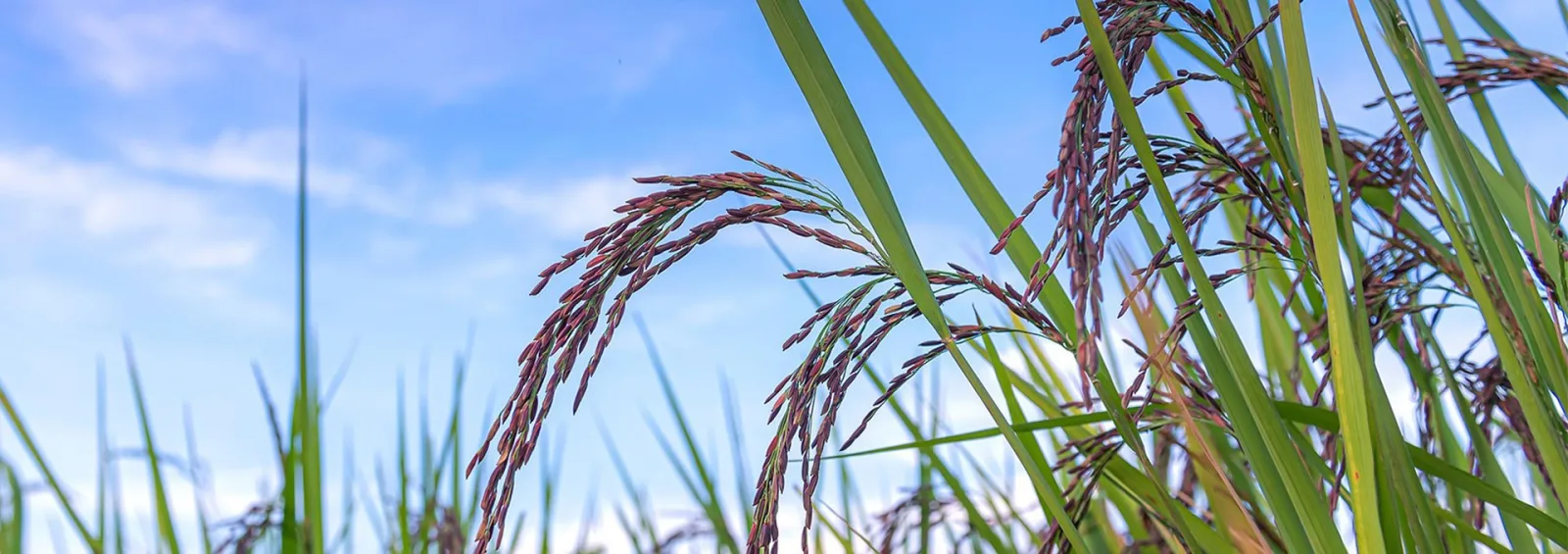 Picture of Riceberry rice (Riceberry)
New rice varieties that add color
- Rainbow rice is the only rice in the world with leaves of many colors, which delights all who see it. There are 5 rainbow rice varieties, each with its own color; planted alternately over a large area they create a field full of color, which could be developed into agritourism found nowhere else in the world. In addition, rainbow rice leaves are nutritionally valuable, as antioxidants and as a rich source of important micronutrients such as iron. If rainbow rice leaves can be developed into food or food supplements, they could help provide people with sufficient food without causing obesity or metabolic syndrome.
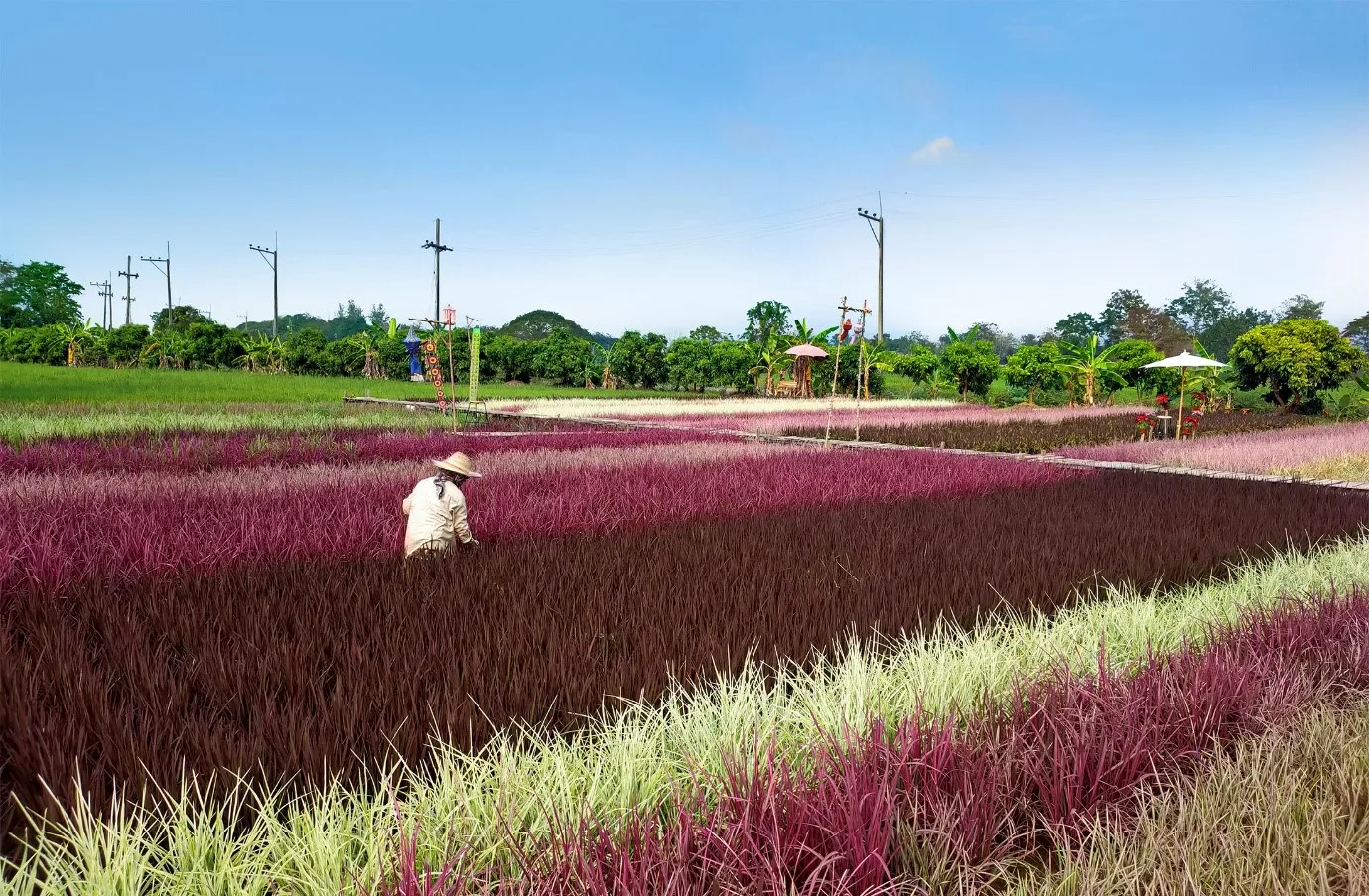 Picture of a Rainbow rice field
Trademark registration
- The Rice Science Center has registered trademarks at national and international levels to protect the identity of valuable products from organically grown Thunya O'Sod rice, such as Riceberry, Sin Lek and Low GI.

Registered trademarks
RESEARCH HIGHLIGHT
- Discovering for the first time a gene responsible for biosynthesis of 2-acetyl-1-pyrroline (2AP), the potent aromatic compound in Thai Jasmine and all aromatic rice found globally. The biotechnology to enhance 2AP accumulation in any non-aromatic rice varieties was described in the patent “Transgenic plants with reduced expression of Os2AP and elevated levels of 2AP was filed for patent for the first time in USA and was granted in 2007. Later on, the patents were filed for patenting in 10 other countries such as Australia, Japan, China, Vietnam, France, U.K. the Netherlands, Germany, and Switzerland.
- Development of new rice varieties for sustainable cultivation and consumer well-being. RSC has focused on developing breeding technology platforms to precisely and efficiently integrate “Plus 6 genes” comprising tolerance to flash flooding and heat, water-used efficiency, resistance to bacterial leaf blight, leaf and neck blast, and brown planthopper. Several elite waxy, aromatic, low glycemic index (low GI), and pigmented rice varieties have been improved for the Plus 6 genes technology. RSC has registered 30 rice varieties including Hommali Rice+4, Thunya Sirin+4, PGI+4, and Riceberry+4.
- There are various well-known rice cultivars from RSC. Riceberry is the most popular and well-studied pigmented rice for therapeutic properties. Cooked Riceberry after taste is well-accepted by health-conscious consumers around the world. Riceberry has also been popular among food industries for its high nutritional values and food properties. Sinlek (brown rice) and Pink+4 (PGI+4) (white rice) are among a few well-studied low GI rice in the world.
- Rainbow rice is a unique rice variety expressing arrays of colorful leaves which creates great impression for observers. There are five varieties of Rainbow rice showing five streaking patterns of colorful green, white, purple, reddish pink leaves. When grown in patterns on a rice field, Rainbow rice creates unique phenomenon for one-of-a-kind agro-tourism in the world, Actually, the leaf of the Rainbow rice is naturally enriched with dietary fiber, antioxidants, micronutrients, and protein. If we can develop Rainbow rice leaves into food supplements and food ingredients, it can help reducing starvation and the risk of non-communicable diseases and metabolic syndrome.
- RSC also registered several trademarks at national and international levels for distinction of quality products from organically-grown medical rice varieties including Riceberry, Sinlek, and LOGI.