
This device has no English text-to-speech voice, so the article may not be read aloud.
Rice Genomics & Molecular Breeding · Thailand
From decoding the rice genome to breeding with molecular technology. A story of accumulated knowledge, dedicated researchers and new tools that protect the quality of Thai rice while raising production efficiency.
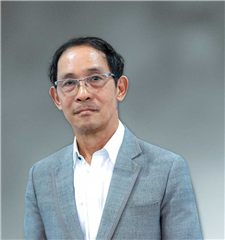 Prof. Dr. Apichart VanavichitLed the Thai team joining IRGSP
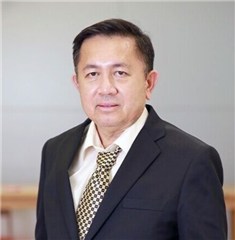 Dr. Theerayut ToojindaPresented "25 Years of Rice Genomic and Molecular Breeding in Thailand" (2024)
Key takeaways
- It began in 1999. Thai researchers joined the International Rice Genome Sequencing Project (IRGSP), studying chromosome 9, which is linked to submergence tolerance.
- The aroma gene Os2AP. It explained the origin of the aroma compound 2AP and led to a US patent (US 7,319,181 B2), granted in 2008.
- Marker-Assisted Selection (MAS) turned DNA data into a breeding tool, giving RD51, Thunyasirin, Hom Chonlasit, Nan 59, Hom Naka, Hom Siam and Hom Nale.
- Many traits in one variety: aroma, starch quality, flood tolerance, disease and insect resistance, without trading quality for resilience.
- Infrastructure and networks: genome–phenotype databases and Mekong sub-region collaboration since 2004 with Myanmar, Cambodia and Lao PDR.
- What next: from MAS to Genomic Selection, genome editing and environmental data, designing varieties for each production ecosystem.
Turning point
A turning point for Thai rice breeding
Thai rice breeding has long been a story of knowledge built up over time. Breeders once relied on how plants looked, selected the best individuals and tested crosses in experimental plots. Today DNA-level data lets them find genes, verify genetic makeup and select plants that carry a target gene with far greater precision.
The decisive change came as rice genomics advanced worldwide. In 1999 a Thai team led by Prof. Dr. Apichart Vanavichit joined the International Rice Genome Sequencing Project (IRGSP), contributing to the study of rice chromosome 9, which was then linked to submergence tolerance and, through international work, to traits such as aroma. Counting from that start to 2024, when 25 Years of Rice Genomic and Molecular Breeding in Thailand was presented at the 3rd International Conference on Rice for the Future, makes 25 years of important academic transition.
No single technology produced this success. It came from linking genetics, molecular genetics, genomics, plant breeding, field testing and cooperation between research institutes and organisations that work closely with farmers. These 25 years are therefore not only a record of gene discoveries and new varieties; they are the history of building Thailand's scientific capacity to turn genetic knowledge into technology that solves real rice production problems.
01 · The beginning
Joining the international scientific stage
By the late 1990s, plant genome sequencing had become an essential way to understand the genetics of economic crops. Rice drew special attention as a staple food and a model for the grasses. IRGSP was formally founded in 1998 as a multinational collaboration to sequence the rice genome at high quality and share the data openly.
Thai researchers joined in 1999, focusing on chromosome regions important for breeding. The collaboration meant far more than receiving data from abroad: it let Thailand build molecular research skills, learn international standards and form a network able to apply genomic knowledge to Thai varieties. Initial funding from Her Royal Highness Princess Maha Chakri Sirindhorn reflected a long-term vision for rice genetics research.
Genome → Gene
From DNA code
to genes that serve Thai rice
Traits once judged by the senses can now be studied down to their genetic basis.
02 · From genome to gene
When DNA knowledge began to answer breeding questions
In 2002 draft rice genome sequences were released by several groups, and IRGSP announced its high-quality draft that December. The finished-quality sequence followed in 2005, covering about 95% of the 389-million-base-pair Nipponbare genome (Nature). Researchers could now map genes and markers systematically and build tools to track genes during breeding.
For Thailand the aroma of Thai jasmine rice was central. Work by Thai scientists led to the study of Os2AP, linked to the compound 2-acetyl-1-pyrroline (2AP), which gives rice its distinctive fragrance. The rice gene discovery unit's work earned a US patent (US 7,319,181 B2), granted in 2008 (NSTDA).
The aroma gene matters on two levels: it deepened the science behind Thai rice quality, and it showed that Thailand can generate specific knowledge tied to the identity of an agricultural product and protect it as intellectual property. Just as important was turning that knowledge into molecular markers breeders can use on large populations.
03 · Marker-Assisted Selection
Turning genetic data into a breeding tool
One of the most important developments of the past 25 years is Marker-Assisted Selection (MAS). Conventional breeding judges plants by growth and yield in trials, which depends on environment and season and needs repeated testing, especially for hard-to-score traits such as flood tolerance, disease resistance or grain-quality genetics.
MAS adds a layer of information: breeders can check whether a plant carries DNA markers linked to a target gene, selecting early and tracking inheritance without waiting for every trait to appear. MAS does not replace field testing, since yield, grain quality, stability and local suitability still have to be assessed.
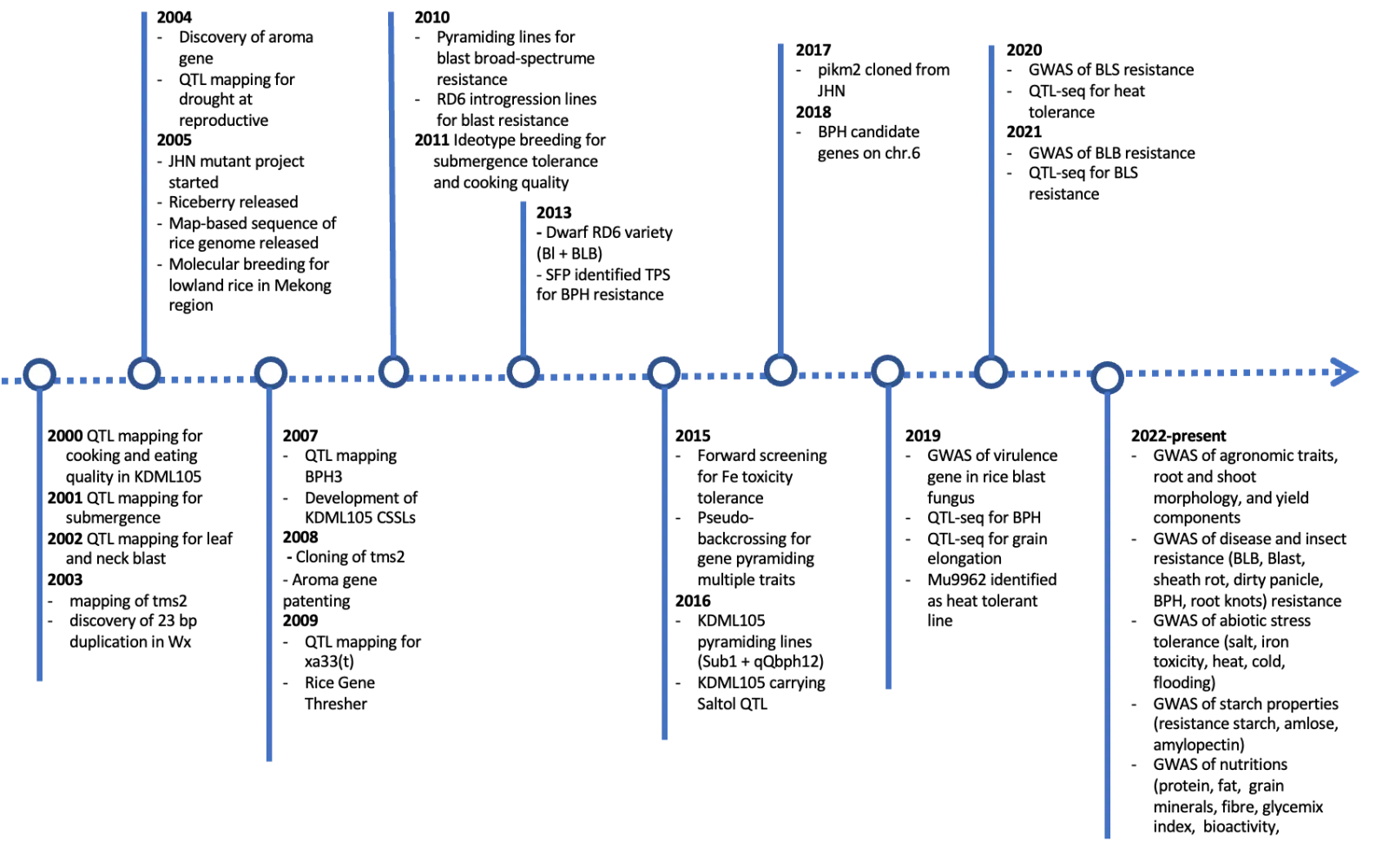
The real turning point was not just having DNA analysis tools, but building a research system that links gene discovery, marker development, crossing design, population selection, testing and variety release.
From knowledge to the field
Research matters most
when it reaches the farmer
A good variety must serve farmers, consumers and the nation's production system.
04 · Varieties
From knowledge to varieties that solve farmers' problems
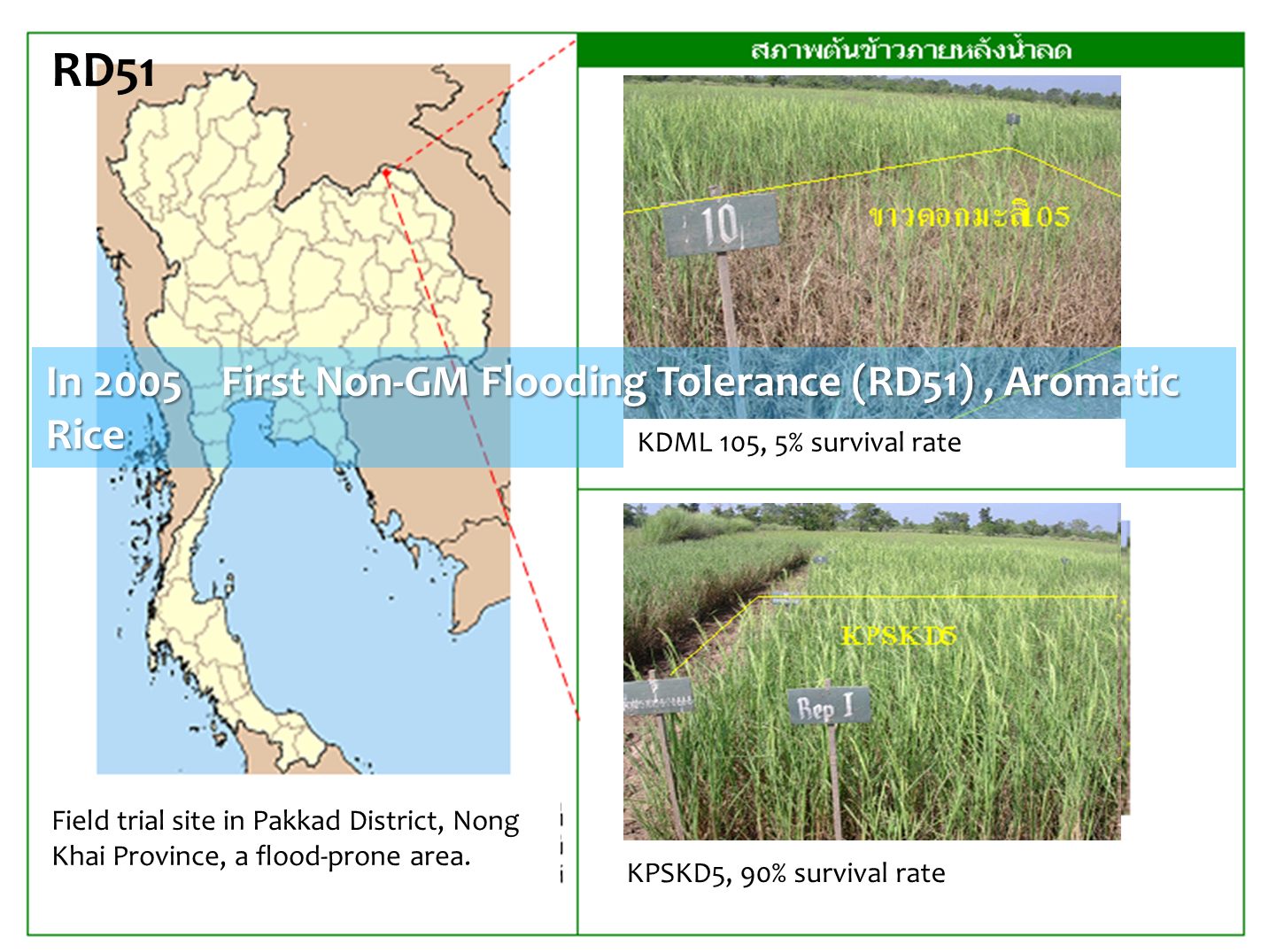
4.1 RD51: flood-tolerant jasmine rice
Sub1RD51 is built on Khao Dawk Mali 105 and was the first KDML105 improvement achieved with MAS, adding the Sub1 gene to handle flash floods in rainfed areas while keeping agronomic traits and cooking quality close to KDML105.
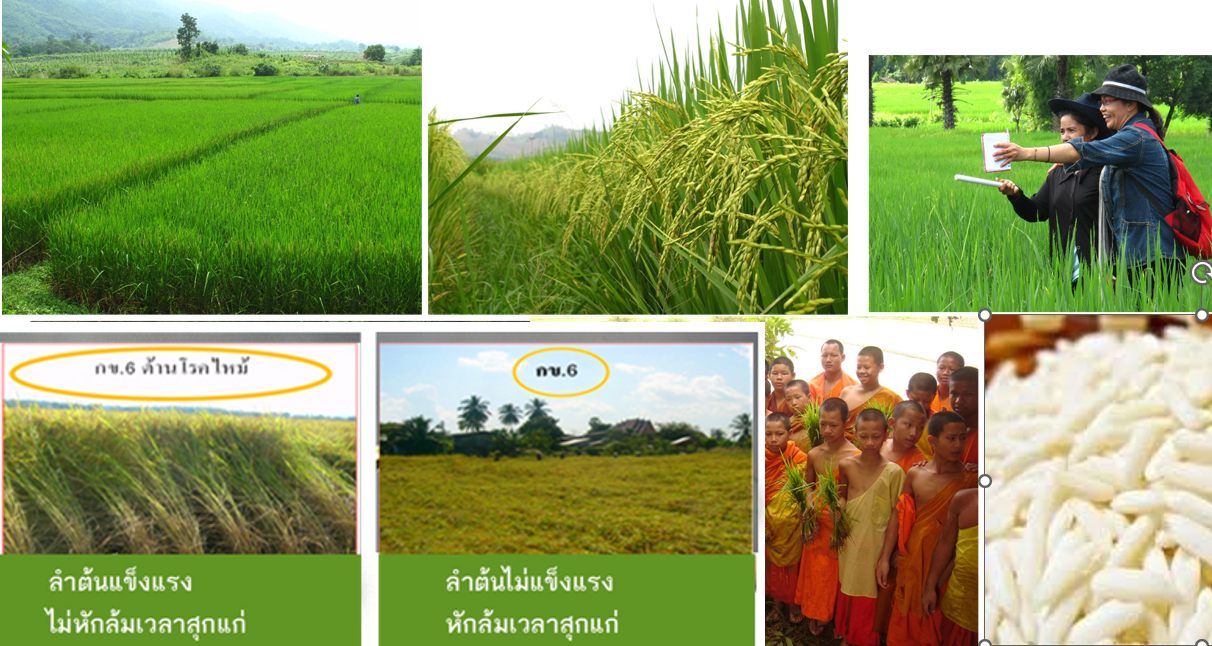
4.2 Thunyasirin: tackling rice blast
BlastThunyasirin is a photoperiod-sensitive glutinous variety developed against blast in rainfed glutinous-rice areas. MAS moved a broad-spectrum resistance gene on chromosome 1 from Jao Hom Nin into RD6 while keeping RD6's cooking quality. It was the first variety to widely solve blast outbreaks, and received its royally bestowed name on 1 December 2010.
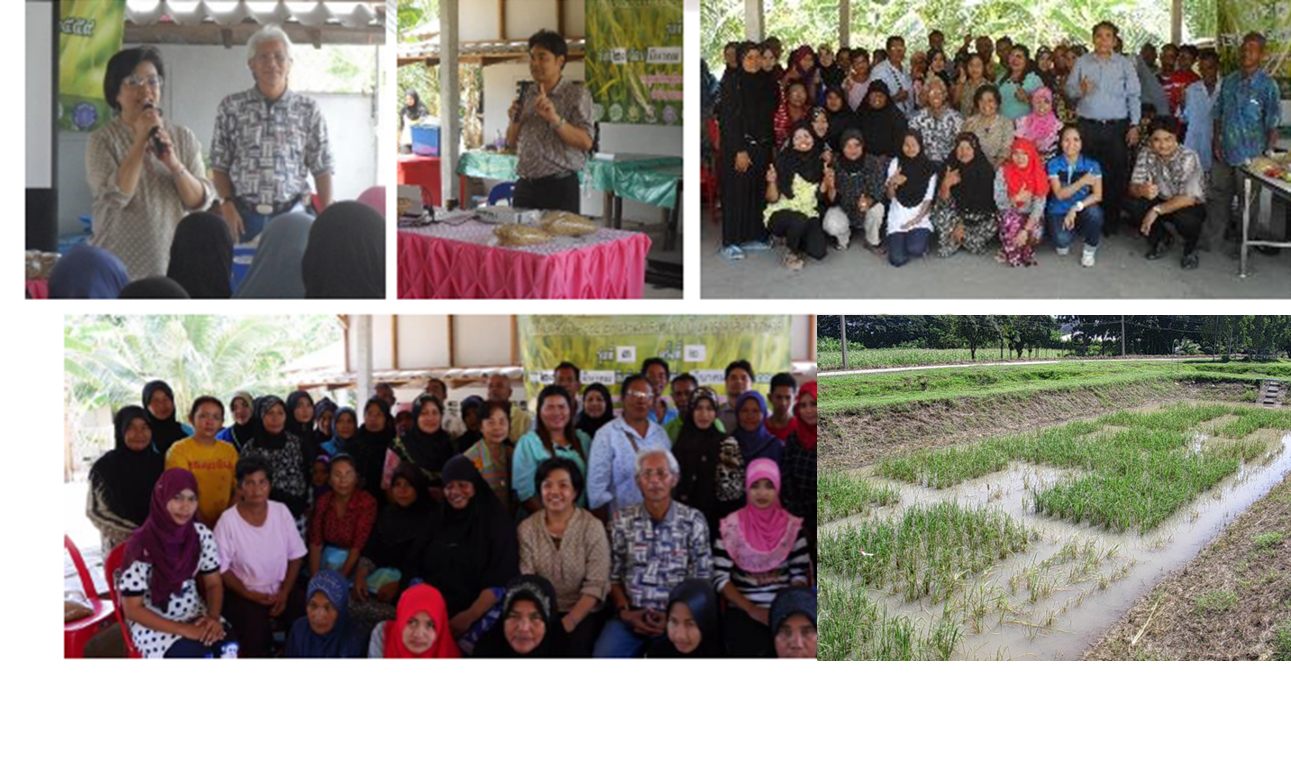
4.3 Hom Chonlasit: for flood-prone areas
Sub1 · aromaHom Chonlasit is photoperiod-insensitive, high-yielding and flash-flood tolerant, from a cross of IR57514 and KDML105. MAS combined Sub1, cooking quality and aroma. Its seed was used to help flood-affected farmers in Phichit, Ayutthaya and Phatthalung.
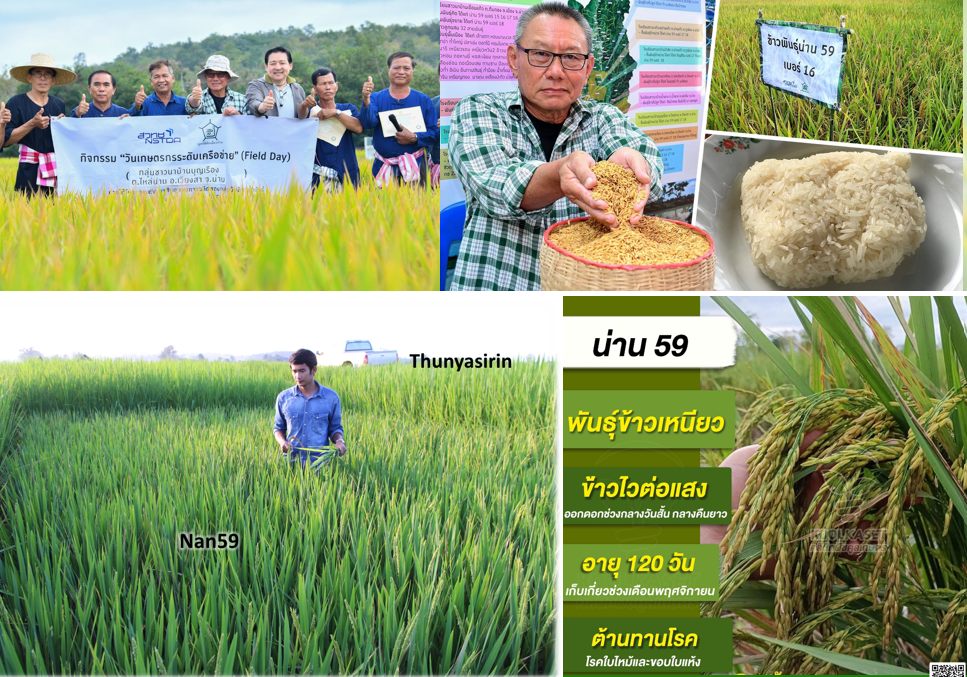
4.4 Nan 59 and Hom Naka: glutinous rice for local conditions
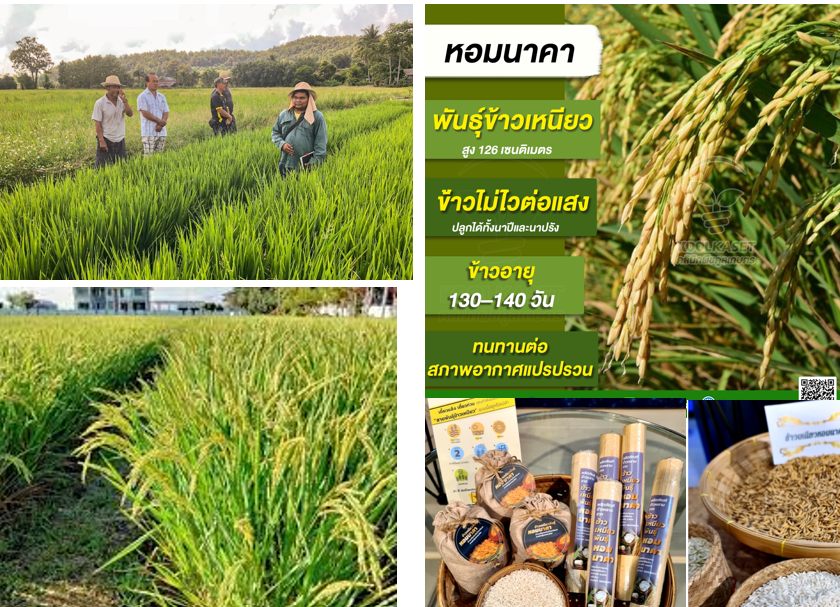
GlutinousNan 59 builds on Thunyasirin, using MAS to combine short stature with resistance to blast and bacterial blight, keeping the cooking quality and aroma of RD6. Hom Naka is photoperiod-insensitive, short, high-yielding, flood tolerant and broadly resistant to blast and bacterial blight.
4.5 Hom Siam and Hom Nale: widening the scope
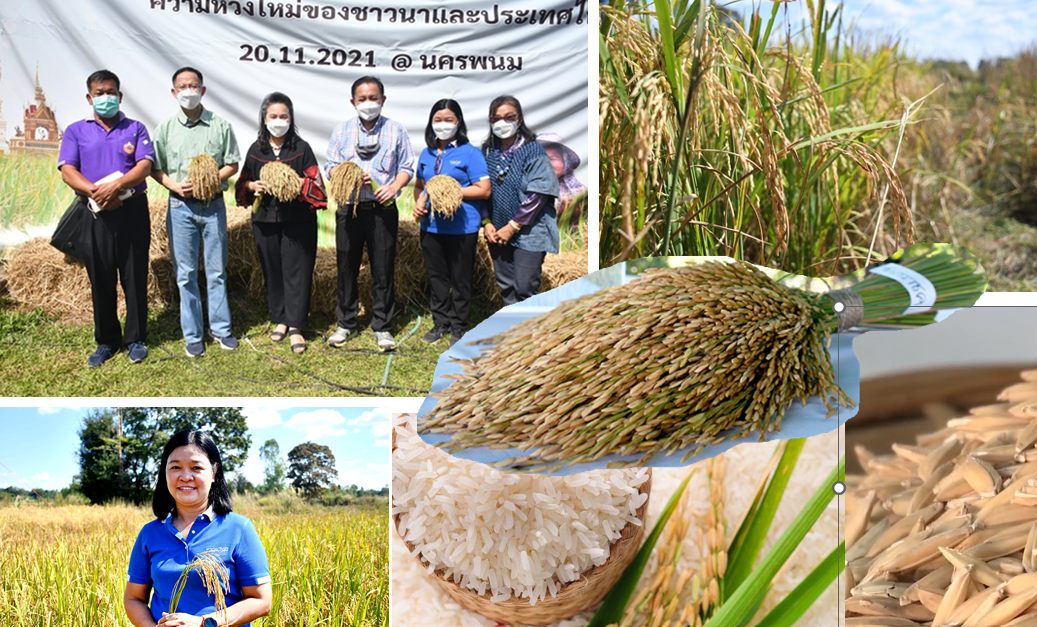
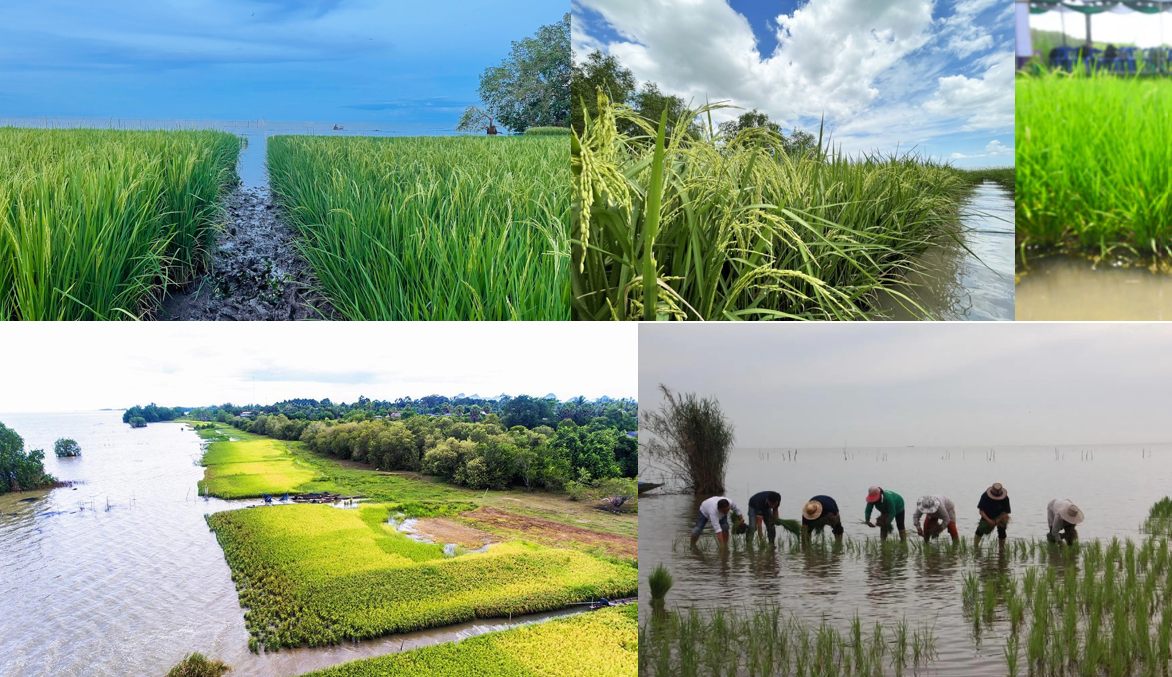
Hom Siam · Hom NaleHom Siam is a photoperiod-sensitive, high-yielding non-glutinous rice resistant to lodging and blast, with cooking quality close to KDML105. Hom Nale is photoperiod-insensitive with low amylose, tolerating flash floods and tidal waves and resisting bacterial blight and brown planthopper. Both were developed with MAS plus pedigree selection.
4.6 Many genes, one variety
Gene pyramidingMolecular markers now let breeders combine traits in one variety, favouring photoperiod-insensitive, high-yielding lines able to cope with a changing climate. Lines bred by pyramiding genes include Hom Jinda 2 and 3, Biotec 1 and 2, Thanya 6601, Hom Chonlasit 2 and 3, Hom Nale 2, Hom Siam 3 and Hom Naka 2, 3 and 4. The point is not how many lines exist, but how breeding history relates to the genetic makeup being selected.

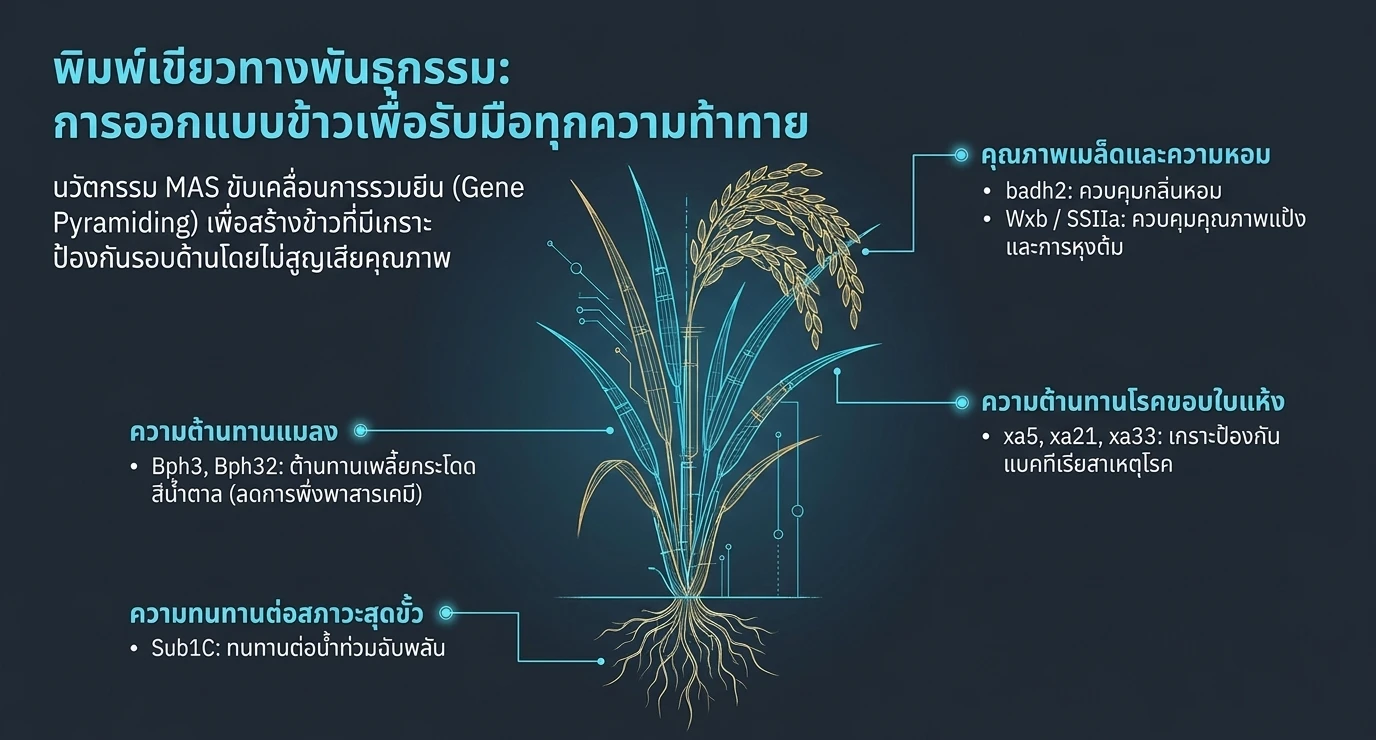
Tracked loci include badh2, Wxb, SSIIa, Sub1C, xa5, xa21, xa33, Bph3, Bph32, qBL1, qBL11, qST1a, qST1b, RK2 and RK3, spanning aroma, starch quality, flood tolerance, disease and insect resistance and environmental response. Photoperiod insensitivity adds flexibility to planting dates; pyramiding resistance genes can broaden protection; and combining grain quality with resistance avoids choosing one over the other. Yet carrying the target genes is only a step: real yield, milling and cooking quality, aroma, uniformity and acceptance by farmers and markets decide success.
05 · Data infrastructure
Genome and phenotype databases
As molecular data grew, the challenge became storing, linking and using genetic data together with phenotype data. The NSTDA rice database gathers genetic and phenotypic data of notable export, industrial and nutritional varieties, with variety-identification tools and markers for tracking key traits (rice database).
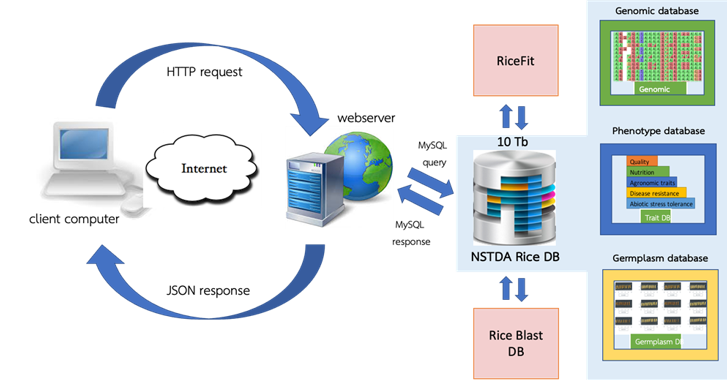
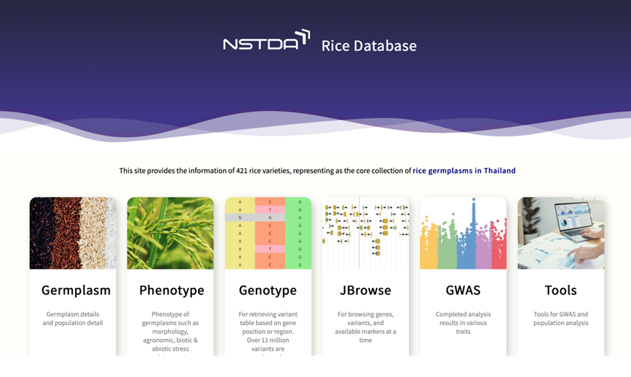
Such databases are strategic: they reduce siloed work and support decisions from choosing parents and setting target traits to checking genetic makeup and judging which markets or areas a variety suits. Going forward, quality data should become infrastructure for analysis, forecasting and designing breeding for specific needs.
06 · Mekong sub-region
From Thai varieties to shared capacity
BIOTEC and Kasetsart University have run a molecular-marker rice breeding programme for Mekong countries since 2004, with partners in Thailand, Myanmar, Cambodia and Lao PDR, through workshops, joint research and graduate scholarships.
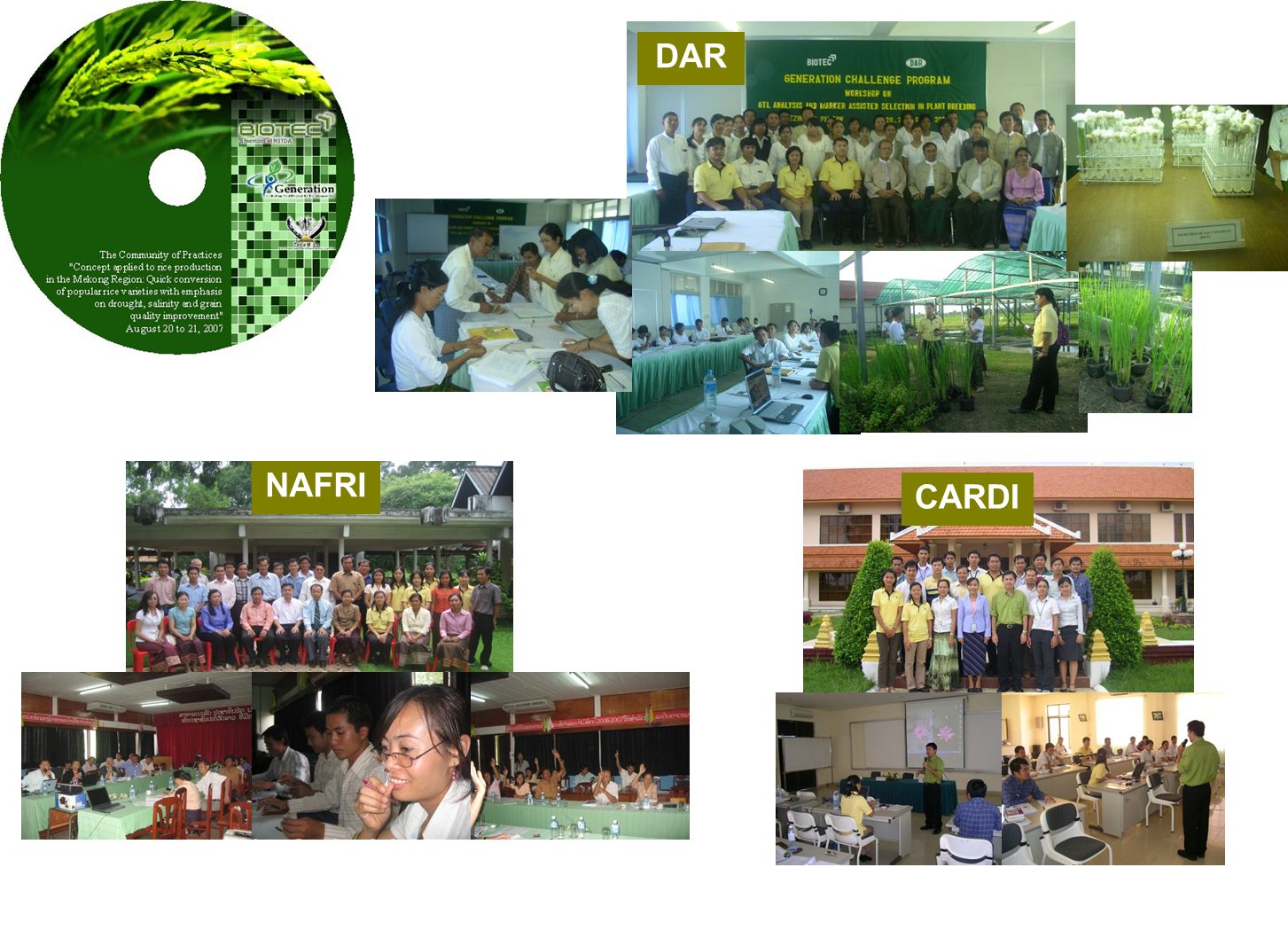
The programme embodies the idea that breeding technology should not stay in one lab or country. Joint results include Soltosin Tulet, a salt-tolerant rice released in Myanmar; Tu Ka Hom, an aromatic rice for Lao demand; and Sebangfai 2 and 3, aromatic, flood- and drought-tolerant varieties released in Lao PDR. Success should be judged by academic output, people developed, varieties actually used and partner countries' lasting ability to keep breeding, not by variety counts alone.
07 · Lessons learned
Five lessons from 25 years
First, investing in basic knowledge underpins long-term innovation. Second, technology has value when tied to real production problems. Third, breeding must balance many traits: yield, grain quality, disease resistance, adaptability and consumer needs together. Fourth, collaboration between researchers and users is essential: on-farm testing, farmer participation, seed production and agency cooperation. Finally, developing people and networks lasts longest, including sharing knowledge with neighbouring countries.
08 · What's next
From MAS to genomics-driven breeding
Genomic Selection (GS) uses genome-wide markers with phenotype data to predict breeding value, promising for traits controlled by many genes such as yield across environments, but needing quality training populations and validated models. Genome editing can change defined loci when gene function is well understood, and should advance alongside safety assessment, off-target checks, intellectual-property management and regulation. Linking genomic with environmental data, field sensors and multi-dimensional analysis can steer breeding toward varieties suited to rainfed, irrigated, flood-prone, drought-prone and saline coastal ecosystems.
The goal is not simply the highest yield under one condition, but a breeding system that can design varieties to suit environments, farmer needs, market quality and resource limits.
Epilogue
25 years of foundations,
and a mission that continues
Building the future of Thai rice with science and innovation.
Epilogue
25 years of foundations, and a mission that continues
From joining an international research project to building knowledge and tools that now shape the nation's varieties, Thailand's 25 years show that scientific progress gains power when tied to society's needs and real production systems. What the country has accumulated is not only research output or new variety names, but people, knowledge, scientific infrastructure and the ability to apply technology to agricultural problems.
The future is more complex: climate change, production costs, demand for nutritious food and global competition. Staying competitive requires sustained research investment and a systematic link between breeding, production and markets. Future success should be measured by whether this knowledge gives farmers better choices, lowers production risk, adds value to Thai rice and keeps Thailand a key player in rice science and innovation for the region and the world.
That is the true meaning of 25 years of Thai rice genomics, and the start of another chapter in building the future of Thai rice with science and innovation.
References
References
- International Rice Genome Sequencing Project. (2005). The map-based sequence of the rice genome. Nature, 436, 793–800. https://doi.org/10.1038/nature03895
- Sasaki, T., Matsumoto, T., Yamamoto, K., et al. (2002). The genome sequence and structure of rice chromosome 1. Nature, 420, 312–316. https://doi.org/10.1038/nature01184
- NSTDA. (n.d.). Rice genome: a catalyst for Thai rice breeding. https://www.nstda.or.th/home/performance_post/rice-genome/
- NSTDA. (n.d.). Rice development. NSTDA Archives. https://www.nstda.or.th/archives/rice-development/
- Toojinda, T. (2024). 25 Years of Rice Genomic and Molecular Breeding in Thailand. 3rd International Conference on Rice for the Future, 15 November 2024, Nonthaburi, Thailand.
- NSTDA. (2021). BIOTEC-NSTDA introduces a new rice cultivar Hom Siam. https://www.nstda.or.th/en/news/news-years-2021/biotec-nstda-introduces-a-new-rice-cultivar-hom-siam.html